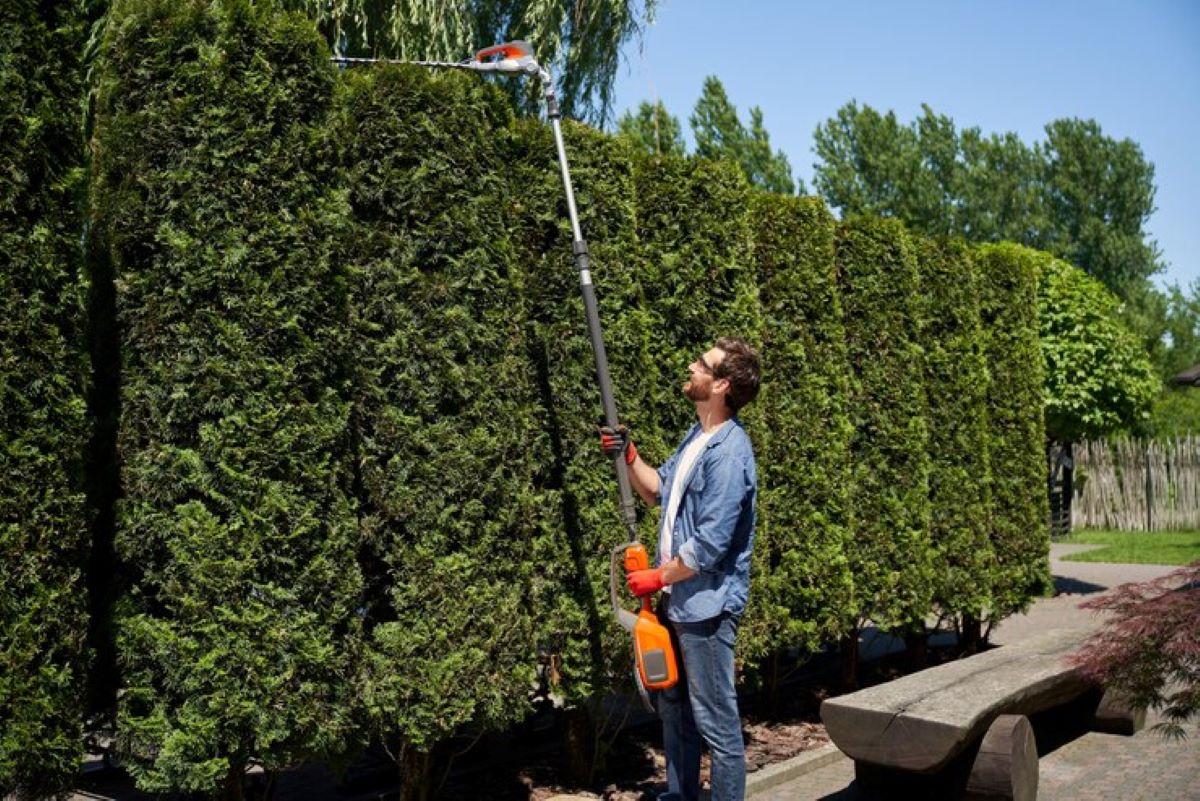
The Inner West has a very specific tree problem. Big trees, small blocks, and almost no room to work. A 20 metre camphor laurel behind a Newtown terrace has a drop zone measured in centimetres, and the only access is a 900mm side passage or through the house.
That combination makes tree removal Inner West work some of the most technically demanding in Sydney. This guide covers the local species, Inner West Council’s controls, heritage considerations, access strategies and what you should expect to pay.
Suburbs Covered
Newtown, Marrickville, Leichhardt, Balmain, Rozelle, Annandale, Stanmore, Petersham, Dulwich Hill, Enmore, Erskineville, Camperdown, Lilyfield, Haberfield, Ashfield, Summer Hill, Croydon, Sydenham, St Peters, Tempe and Birchgrove.
Why the Inner West Is Technically Hard
No drop zone
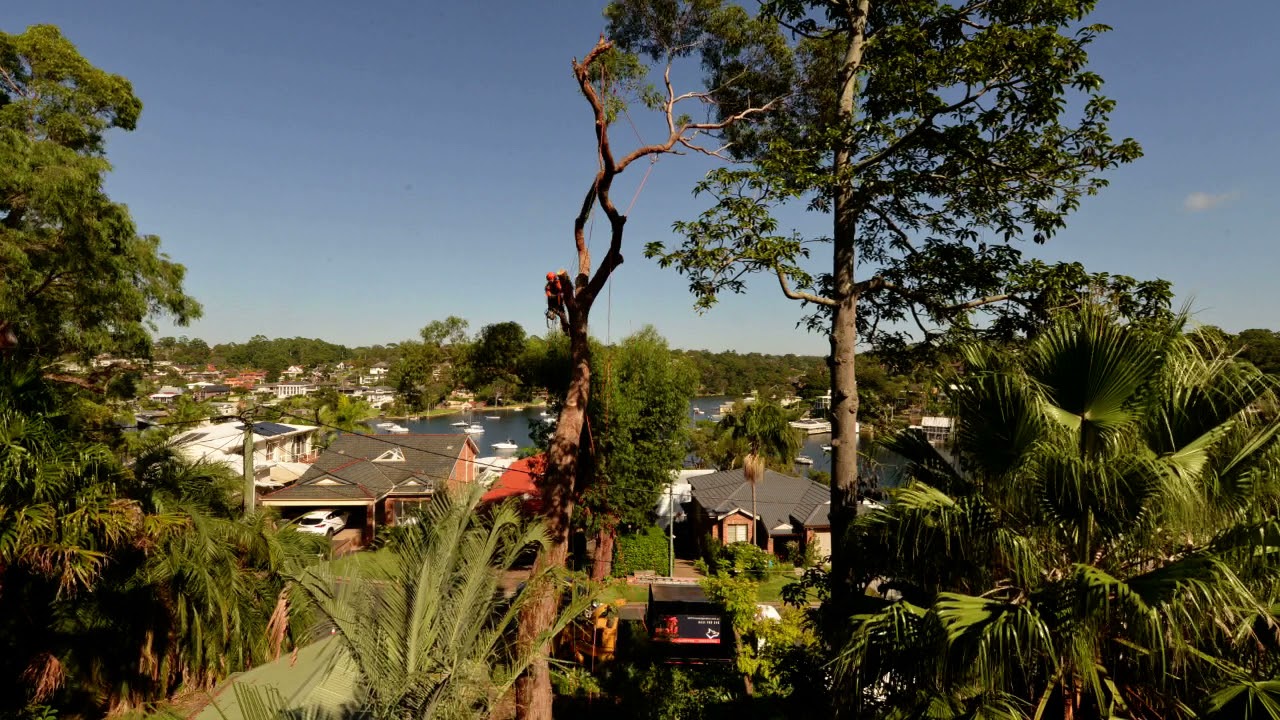
On a standard terrace block, a felled limb has nowhere to land that is not a roof, a fence, a clothesline or a neighbour’s courtyard. Everything must be roped and lowered on a friction device, piece by piece.
Access
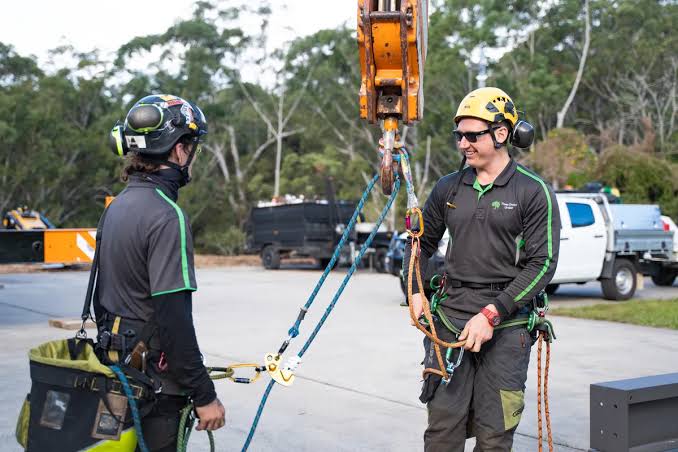
Side passages under a metre wide, rear lanes that a chipper cannot enter, and shared driveways. Crews routinely carry material through houses on protective sheeting, or crane over the roofline from the street.
Neighbours on three sides
Work within touching distance of adjoining properties means written permissions, protective screening, and often overtime to avoid noise-restricted hours.
Overhead services
Many Inner West streets retain overhead power, phone and NBN cabling running directly through rear yards. Approach distance rules apply and accredited operators are required.
Heritage overlays
Large parts of Balmain, Haberfield, Annandale and Glebe sit within heritage conservation areas, which can add another layer to a tree removal Inner West application.
Common Problem Trees in the Inner West
Camphor laurel
The defining Inner West problem tree. Planted widely a century ago, now enormous, with aggressive roots that invade terracotta sewer lines and lift sandstone flagging. Widely regarded as an environmental weed and generally the most straightforward removal to get approved.
Chinese elm and privet
Self-seeded, fast growing, weedy, and forever pushing through fence lines and retaining walls.
Jacaranda and liquidambar
Beautiful street trees, terrible root behaviour on small blocks. Surface roots crack paths and block stormwater.
Cocos palm
Declared a weed by many councils. Heavy seed drop, invasive spread into bushland, and dangerous falling seed heads.
Mature figs
Hill’s weeping fig and Moreton Bay fig planted in tiny courtyards. Root systems that will eventually take out a footing. Removal is expensive because of the root plate.
Leyland cypress
Planted as fast screening, now 15 metres tall, dead at the base and impossible to reduce because it will not reshoot from brown wood.
Inner West Council Rules
Trees on private land across the Inner West are protected under Chapter 2 of the State Environmental Planning
Policy (Biodiversity and Conservation) 2021, implemented through Inner West Council’s Development Control Plan and tree management policy. Review the NSW vegetation controls for non-rural areas before lodging an application.
In general terms, consent is required to remove any non-exempt tree and to prune more than 10 percent of a canopy. Typical exemptions cover trees below a specified height, listed exempt and weed species, and dead or imminently hazardous trees.
Applications usually require photographs, a site plan and, for anything contested, an AQF Level 5 arborist report. Replacement planting conditions are increasingly standard because the Inner West has among the lowest canopy cover in Sydney and the council has active targets to raise it.
Properties in heritage conservation areas may need additional assessment where the tree contributes to the significance of the streetscape. A contractor doing regular tree removal Inner West work will know which streets those are.
Access Strategies and What They Cost
Climbing and hand-carry
The default. Slow, labour-intensive, no machinery damage. Adds 30 to 70 percent to labour compared with an open block.
Crane over the roof
Fast and often surprisingly economical for a large tree, because the crane replaces two days of hand-carrying. Requires street closure and traffic control. Budget $2,000 to $6,000 for crane and traffic management combined.
Rear lane access
Where available, the cheapest option. Confirm the lane width and any council access restrictions.
Through-house access
Used as a last resort with full floor protection. Adds time and risk of damage claims.
Neighbour’s property
Often the practical solution. Get permission in writing, agree on make-good, and photograph the condition of their yard before starting.
What Tree Removal Costs in the Inner West
Indicative 2026 pricing, generally 15 to 30 percent above open-block Sydney rates due to access:
- Small tree under 5m, rear courtyard: $500 – $1,100
- Medium tree 5-10m, hand-carry access: $1,200 – $2,600
- Large camphor laurel 12-18m: $2,800 – $6,500
- Mature fig with root plate complications: $5,000 – $15,000
- Crane-assisted removal with traffic control: add $2,500 – $6,000
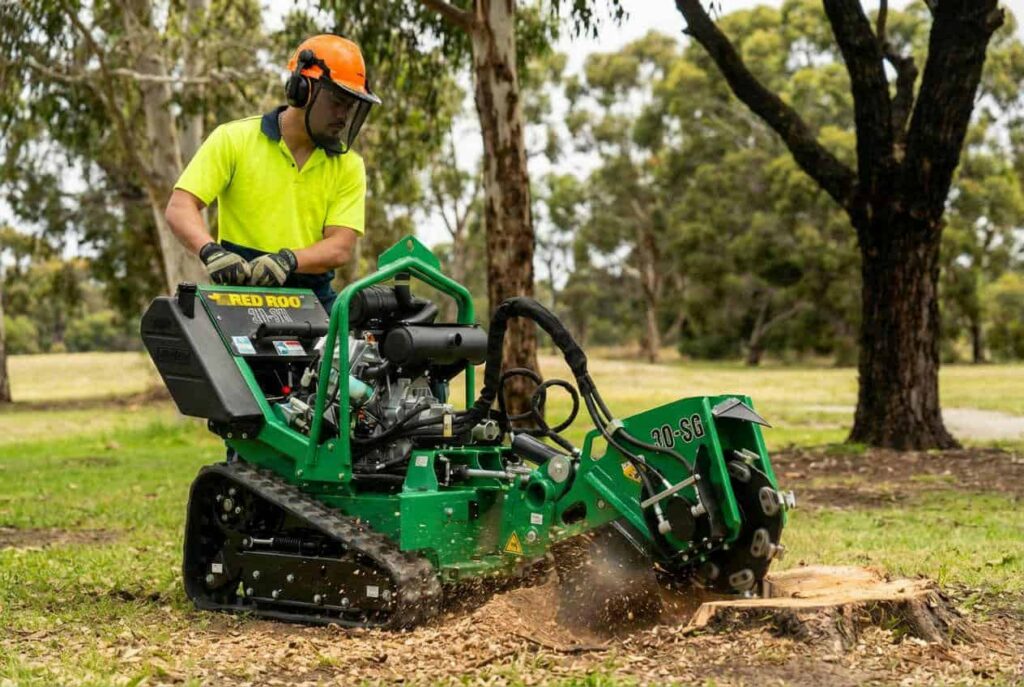
- Stump grinding, narrow access machine: $200 – $900
- Cocos palm removal: $300 – $800 each
Sewer and Footing Damage: The Inner West Special
Terracotta sewer lines laid in the early twentieth century run beneath most Inner West backyards, and camphor laurel and fig roots find every joint. The symptoms are familiar: recurring blockages, root balls in the CCTV footage, and a plumber who quotes relining every two years.
Root invasion is one of the strongest grounds for a removal application, but you need evidence: a plumber’s CCTV report, the root material recovered, and ideally an arborist confirming which tree is responsible. Research from UTS on Sydney urban trees adds useful context on the benefits of retaining canopy where risk can be managed. Councils will not accept assumption. Assemble that file before lodging, and your tree removal Inner West application has a far better chance.
Safety in Confined Sites
SafeWork NSW has repeatedly flagged serious tree work incidents involving falls from height, workers struck by falling objects and rope entanglement in woodchippers. Confined Inner West sites concentrate every one of those risks.
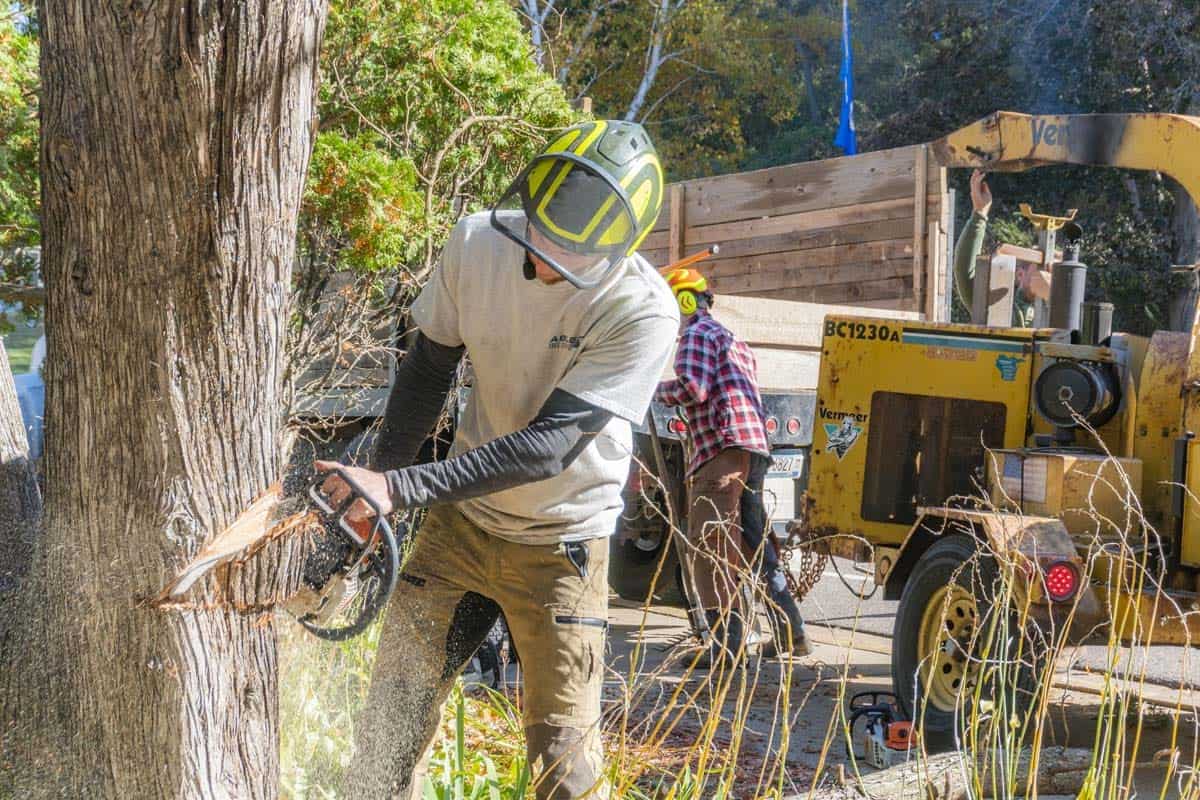
What competent looks like on a terrace block: dual attachment climbing, every limb roped and lowered rather than dropped, a defined exclusion zone even if it is only three metres, protective screening over neighbouring glass, and a chipper positioned with a clear, supervised feed path.