Nowhere in New South Wales does the tension between keeping trees and staying safe play out more sharply than the Blue Mountains. Residents live inside a World Heritage listed landscape, on ridgelines surrounded by bushland, in one of the highest bushfire risk areas in the country.
That makes tree removal Blue Mountains work a genuinely different discipline to suburban Sydney. Different species, different regulation, different terrain, and a completely different risk conversation.
Towns Covered
Glenbrook, Blaxland, Warrimoo, Springwood, Faulconbridge, Linden, Woodford, Hazelbrook, Lawson,
Bullaburra, Wentworth Falls, Leura, Katoomba, Medlow Bath, Blackheath, Mount Victoria and Mount Wilson.
What Makes the Mountains Different
Bushfire exposure
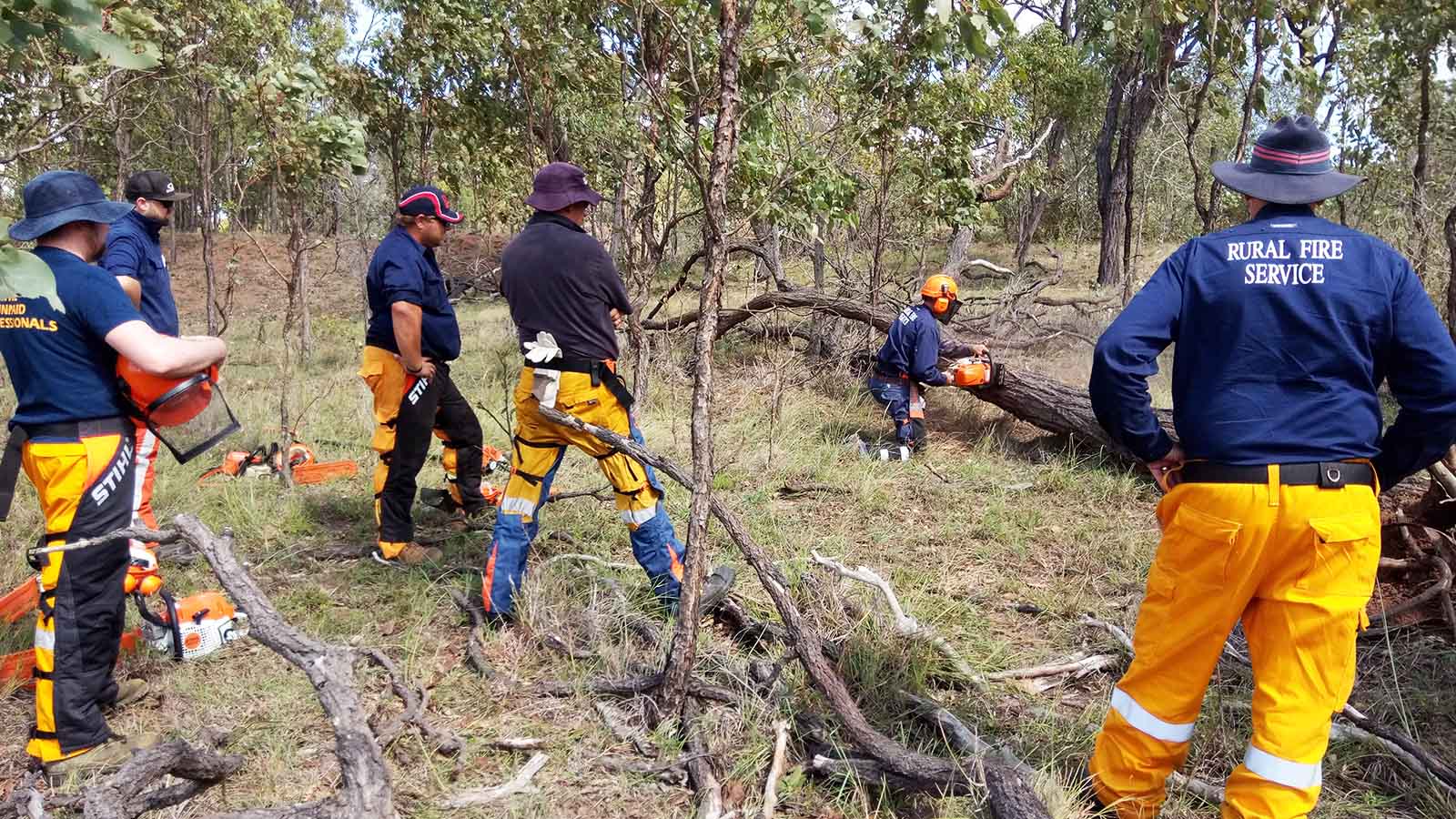
Most properties sit within a bushfire prone area. Vegetation management is not cosmetic; it is part of an asset protection strategy. That drives a large share of tree removal Blue Mountains demand.
Terrain
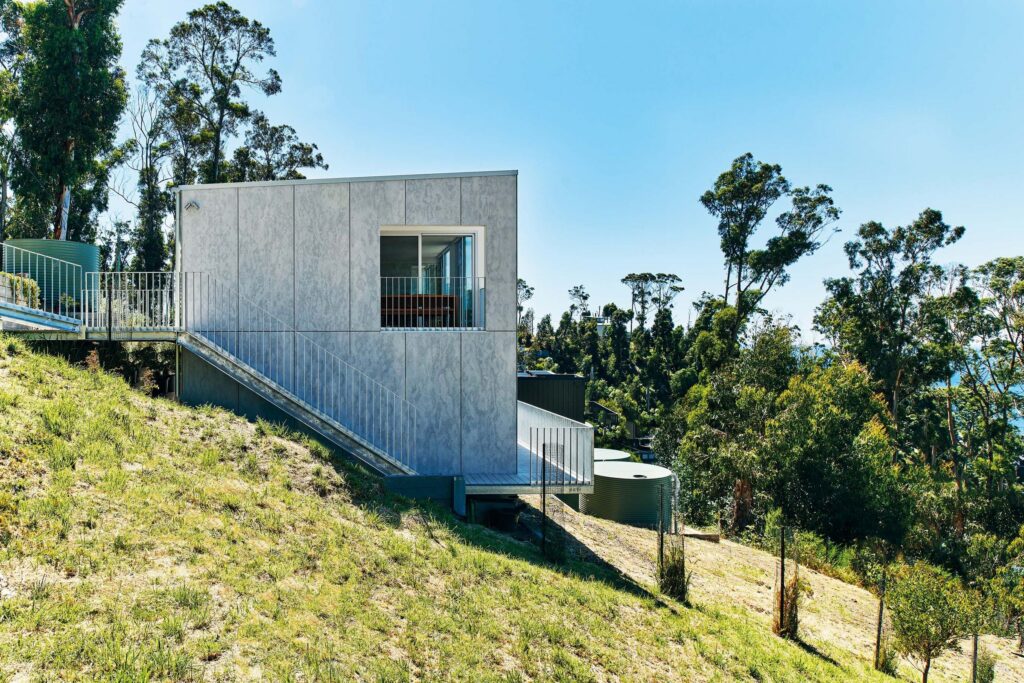
Steep escarpment blocks, gully properties, long unsealed driveways and limited turning space. Machinery access is frequently impossible and everything is climbed and hand-carried, or lifted.
Species
Tall, straight eucalypts with high canopies and long, heavy limbs. Blue Mountains ash, mountain grey gum, scribbly gum, Sydney peppermint and turpentine dominate. Many are 30 metres plus. Regulation
Blue Mountains City Council applies tree preservation controls under the state vegetation policy, and there are additional environmental protections given the World Heritage Area, endangered ecological communities such as hanging swamps, and threatened species habitat.
Weather
High winds along the ridgeline, snow and ice at the upper end, and extreme fire weather in summer. Trees here fail differently, and more often.
The 10/50 Vegetation Clearing Scheme
This is the single most important thing for Blue Mountains property owners to understand.
The NSW Rural Fire Service 10/50 Vegetation Clearing Scheme allows people in designated entitlement areas to:
- Clear trees on their own property within 10 metres of a home, without seeking approval
- Clear underlying vegetation such as shrubs, but not trees, within 50 metres of a home, without seeking approval
The critical qualifications:
- Your property must be inside a 10/50 Vegetation Clearing Entitlement Area. Check the official RFS online tool, and check it on the day you intend to clear, because entitlement areas, excluded matters and rules change.
- You may only clear your own land.
- All work must comply with the 10/50 Vegetation Clearing Code of Practice.
- Excluded matters apply, including certain heritage, geotechnical and environmentally sensitive land.
Where the entitlement applies and no other restriction exists, you do not need council approval or a Local Land Services approval. This makes 10/50 a genuinely useful pathway for tree removal Blue Mountains residents undertaking asset protection work. It is not, however, a blanket licence to clear.
When You Still Need Council Consent
Outside a 10/50 entitlement, or beyond the 10 metre zone, ordinary tree preservation rules apply. Consent is generally needed to remove a non-exempt tree or to prune more than 10 percent of a canopy.
Blue Mountains City Council applies additional scrutiny where trees form part of an endangered ecological community, provide habitat for threatened species, sit within a riparian corridor or hanging swamp catchment, or contribute to the World Heritage setting. Applications typically require an arborist report and often an ecological assessment.
Any competent tree removal Blue Mountains contractor will tell you which pathway applies before quoting.
Hazard Trees: What to Watch For
Mountains conditions produce specific failure modes.
- Fire-damaged trees. Post-fire eucalypts may look alive from epicormic regrowth while the structural wood is compromised. Basal scarring and internal charring are common and dangerous.
- Drought-stressed limb drop. Large eucalypts shed limbs in heat with no warning and no wind.
- Windthrow on ridgelines. Shallow soils over sandstone plus high exposure equals uprooting.
- Undercut root plates. Erosion along gully edges leaves root systems unsupported.
- Dead standing timber. Extremely common after fire events, and a serious risk near dwellings and access tracks.
A post-fire structural assessment by a qualified arborist is one of the better investments a mountains property owner can make.
Access and Method
On a steep block, the removal method is dictated entirely by what can reach the tree.
- Climbing and rigging: the default on gully blocks. Every section roped and lowered.
- Directional felling into a clear zone: where the block allows it, this is fastest and cheapest.
- Elevated work platform: viable only on level frontages with truck access.
- Crane: rarely feasible on escarpment properties, occasionally used in town centres.
- Winch and skid extraction: used to move trunk sections uphill to a loading point.
Disposal is its own challenge. Long driveways mean multiple trips, and tip facilities are further apart than in the metro area, which is why tree removal Blue Mountains quotes often carry a higher disposal component.
What It Costs
Indicative 2026 pricing:
- Small tree under 5m: $450 – $950
- Medium tree 5-12m: $950 – $2,400
- Large eucalypt 15-25m, clear fell zone: $2,000 – $5,000
- Large eucalypt, rigging over a dwelling: $4,000 – $10,000
- Dead standing fire-damaged tree (high risk): $2,500 – $8,000
- Asset protection zone clearing: $2,500 – $12,000 per acre depending on density
- Stump grinding: $150 – $900
- Chipping and mulching on site: often cheaper than removal, and useful for erosion control
A useful cost saving in the mountains: leave the chip on site. It suppresses weeds, controls erosion on slopes, and saves the crew a long haul.
Fire Preparation Beyond Tree Removal
Removal is only one part of an asset protection strategy. The RFS emphasises a broader approach: maintaining separation between tree canopies, removing fine fuels and ladder fuels beneath trees, keeping gutters clear of leaf litter, trimming branches overhanging roofs, and maintaining defendable space around the dwelling.
A smart tree removal Blue Mountains plan often removes fewer trees than owners expect, and focuses instead on canopy separation, deadwooding and understorey fuel reduction. Research from the Australian university urban-forest hub supports keeping mature canopy where risk can be managed; it also reduces wind speed at ground level and shades the property in summer.