The Hills District covers some of Sydney’s most varied residential land: dense new estates at Rouse Hill and Box Hill, established leafy suburbs at Castle Hill and West Pennant Hills, and semi-rural acreage through Dural, Glenorie and Kenthurst. Each of those settings produces a completely different tree job.
This guide covers what tree removal Hills District residents actually need to know: the council rules that catch people out, the local species, acreage clearing, and what work costs in 2026.
Suburbs Covered
Castle Hill, Baulkham Hills, Bella Vista, Kellyville, North Kellyville, Rouse Hill, Beaumont Hills, Glenhaven, Dural, Kenthurst, Annangrove, Box Hill, Glenorie, Middle Dural, West Pennant Hills, Cherrybrook, Winston Hills and Northmead.
The Rule That Catches Everyone Out
The Hills Shire Council is explicit, and it surprises a lot of people. Consent is required to:
- Prune a tree by more than 10 percent
- Remove any tree not exempted from the Tree Preservation Order
- Substantially alter the soil level within 3 metres surrounding a tree
That third one is the sleeper. Building a retaining wall, laying a driveway, raising a garden bed or excavating for a pool within three metres of a protected tree can require consent even though you never touch the tree itself. Root zone damage is one of the most common causes of tree decline in the Hills, and the council knows it.
The authority sits under the State Environmental Planning Policy (Biodiversity and Conservation) 2021, which includes provisions requiring the preservation of trees and bushland within The Hills Shire. Review The Hills Shire private-land tree rules before starting work.
Any legitimate tree removal Hills District contractor will raise the consent question before quoting. If they do not, that tells you something.
Exemptions
Exemptions typically cover trees below a specified height, species on the council’s exempt list, declared noxious and environmental weeds, and dead trees or trees posing an imminent risk to life or property.
“Imminent risk” is the most abused exemption in the industry. Councils across Sydney require evidence, usually an AQF Level 5 arborist assessment plus photographs. Removing a healthy protected tree and claiming imminent risk after the fact is a fast route to a five-figure penalty.
The Trees You Deal With Out Here
Blue gum and forest red gum
Remnant canopy trees, often the tallest thing on the block, frequently protected and sometimes on a significant tree register. Large limbs, high value, and expensive to work on.
Grey ironbark and turpentine
Dense hardwood, slow to cut, common through West Pennant Hills and Cherrybrook. Excellent firewood if you keep the timber.
Camphor laurel and privet
The standard weed removals. Usually exempt or easily approved.
Radiata pine and cypress windbreaks
A legacy of the Hills’ orchard and acreage past. Now tall, top-heavy and prone to windthrow. A big share of Professional tree removal Hills District work after storms.
Liquidambar and Chinese tallow
Estate plantings with aggressive surface roots that lift driveways and block stormwater.
Fruit and citrus orchard remnants
On older Dural and Glenorie properties, often declining and needing removal or restorative pruning.
Acreage and Rural Blocks
On semi-rural blocks the job changes completely. Instead of one tree in a courtyard, you may be clearing a fence line, thinning a windbreak, creating an asset protection zone or dealing with a paddock full of dead standing timber.
Key differences:
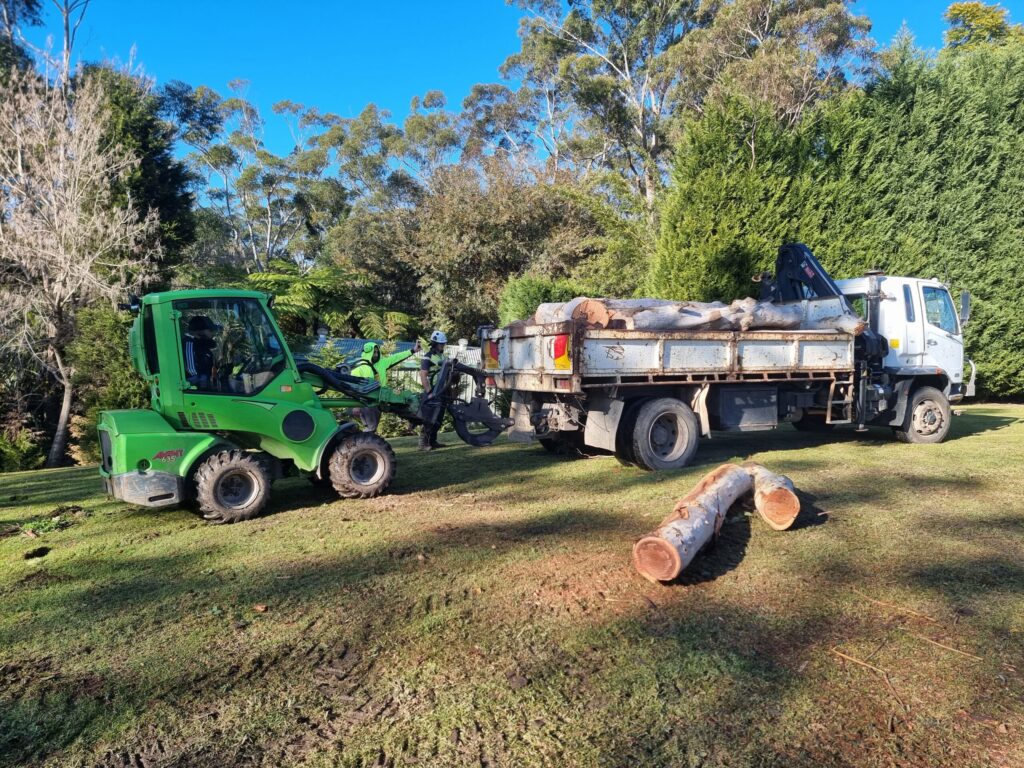
- Machinery access. Trucks, chippers, excavators and forestry mulchers can usually get to the work, which lowers cost per tree dramatically.
- Directional felling. Open ground means trees can be felled whole rather than dismantled, which is far faster.
- On-site processing. Chipping and mulching on site avoids disposal cost entirely.
- Native vegetation rules. Clearing native vegetation on rural-zoned land is regulated separately through Local Land Services, not just council. Check before clearing.
- Bushfire zones. Properties adjoining bushland may fall within a 10/50 Vegetation Clearing Entitlement Area. Verify on the RFS tool on the day of clearing.
Bulk tree removal Hills District pricing on acreage is typically quoted per day or per hectare rather than per tree.
What It Costs
Indicative 2026 pricing:
- Small tree under 5m: $400 – $850
- Medium tree 5-10m: $850 – $1,900
- Large gum 12-20m, clear access: $1,900 – $4,500
- Large gum over a house, rigged: $4,000 – $9,000
- Palm removal: $250 – $700
- Stump grinding: $130 – $850
- Windbreak or fence line clearing (per day, crew plus chipper): $2,000 – $3,500
- Acreage clearing with forestry mulcher: $1,800 – $4,000 per day
- AQF5 arborist report for council: $450 – $1,400
Hills District pricing sits close to the Sydney average, and often below the North Shore or Inner West, because access is generally better. Research from Western Sydney University on tree cooling is a useful reminder that healthy canopy has practical value. Newer estates with wide driveways are the cheapest jobs in Sydney to service.
Development and Construction
With continued development through Box Hill, North Kellyville and the North West Growth Area, a lot of tree work here is tied to building.
If trees sit within or adjacent to a proposed footprint, removal is generally assessed through the development application rather than a standalone tree permit. Retained trees will attract Tree Protection Zone conditions: fencing, ground protection, no storage of materials inside the TPZ, and supervision by a project arborist at defined hold points.
Breaching a TPZ condition is a common and expensive mistake. Root damage during construction kills the tree slowly, and the certifier will not sign off. Budget for a project arborist from the start.
Safety
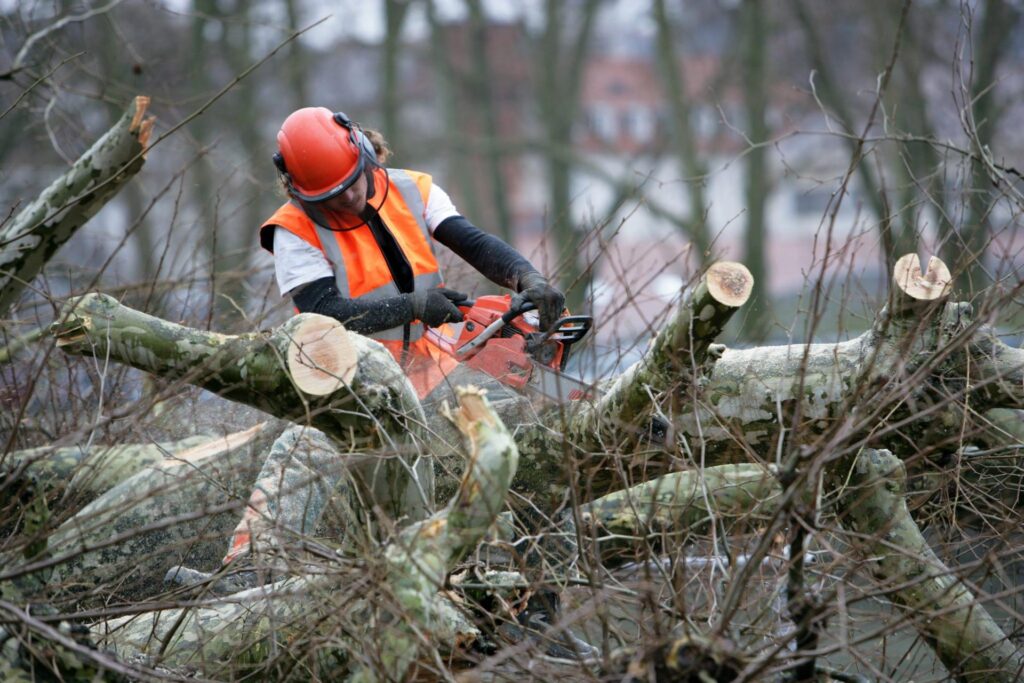
SafeWork NSW has responded to a rising number of serious incidents in tree work, principally falls from height and workers struck by falling objects. On large Hills District gums with long horizontal limbs over roofs, the margin for error is small.
What to insist on: minimum AQF Level 3 for climbing crew, $20 million public liability, a Safe Work Method Statement for work at height, accredited operators for anything near overhead conductors, and a defined exclusion zone. Cheap tree removal Hills District quotes almost always come from operators missing at least one of those.