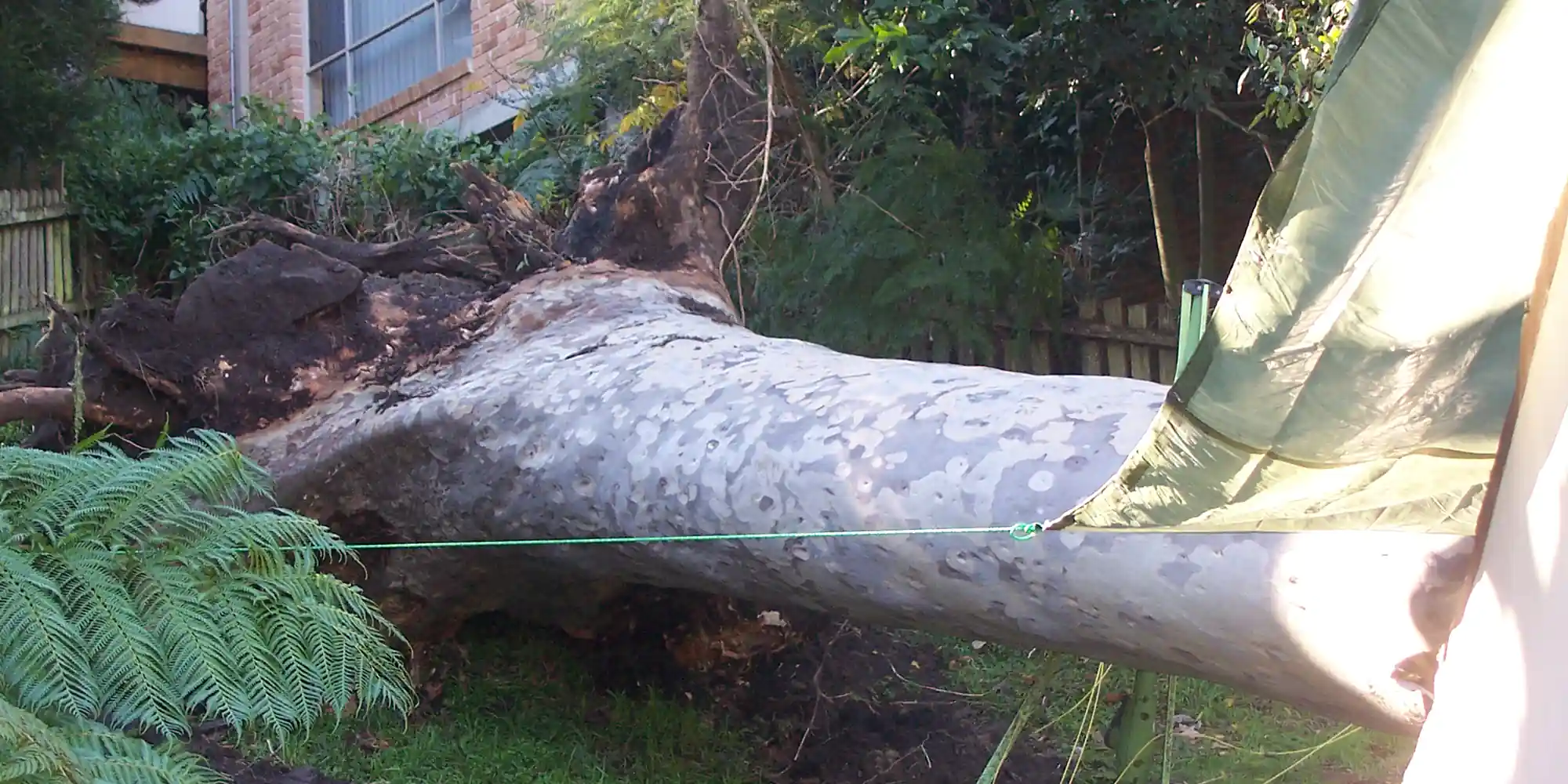
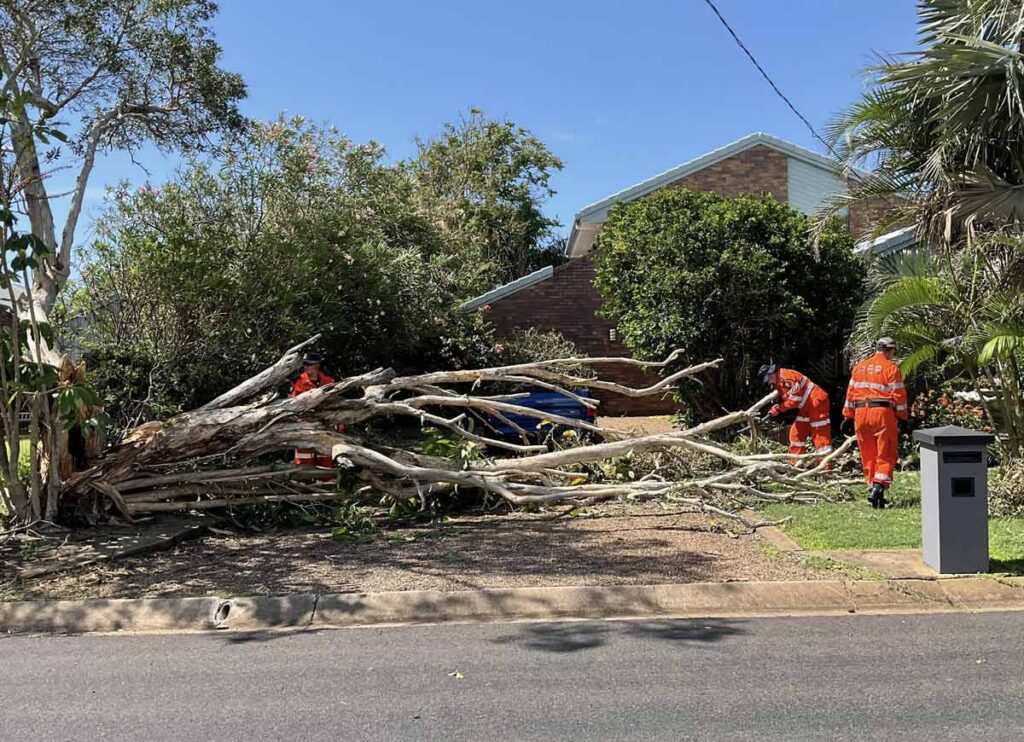
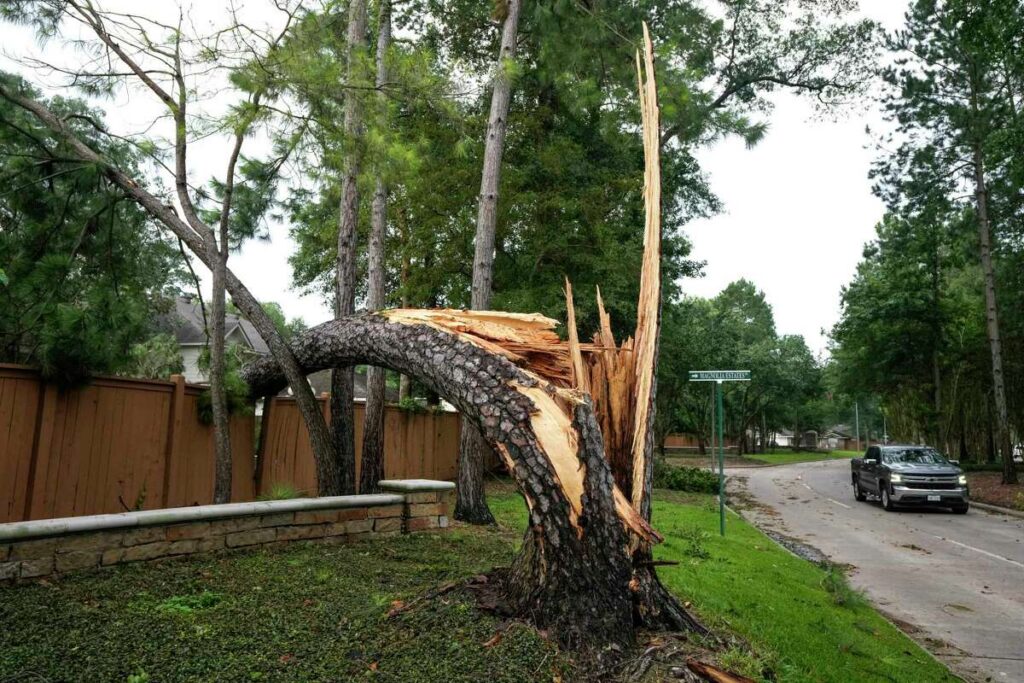
Storms can turn a healthy tree into an urgent hazard in minutes. Homeowners usually need to balance safety, legal duties, insurance rules, and the right contractor, often while access is blocked and power lines are down.
This guide explains what to do first, when tree removals are necessary, and how to avoid expensive mistakes.
What should they do immediately after storm damage?
They should treat the area as dangerous until proven otherwise. The safest first step is to keep people and pets away, especially if branches are hanging, the trunk is split, or the tree is leaning.
If there are downed power lines or the tree is touching cables, they should call the electricity network operator or emergency services and stay well clear. They should take clear photos from a safe distance for insurance before anything is moved.
How can they tell if a tree needs removing or just pruning?
They should assume removal is likely if the trunk is cracked, the tree has lifted roots, or it has developed a sudden lean. A tree that has lost a large proportion of its canopy can also become unstable over the next weeks.
Pruning is often enough when damage is limited to small or medium limbs and the main structure is sound. A qualified arborist can confirm whether the tree can be made safe with reductions and selective cuts, rather than full removal.
When is storm damage considered an emergency?
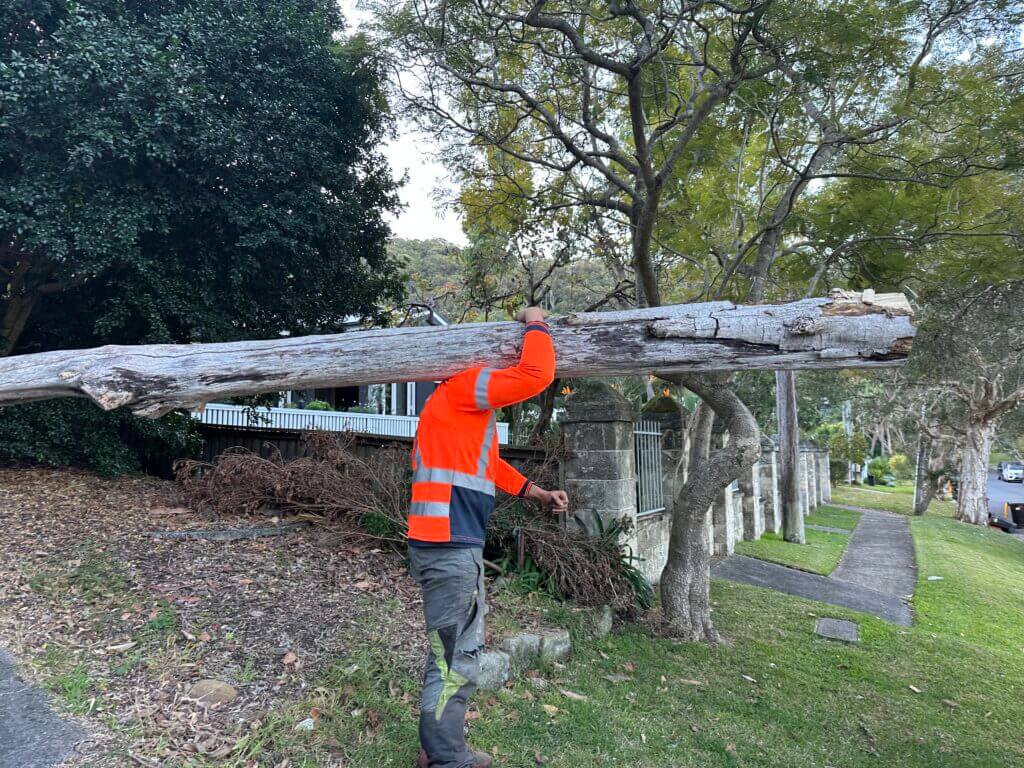
It is an emergency when there is an immediate risk to life or major property. Examples include a tree blocking an exit, resting on a roof, threatening to fall onto a public pavement, or tangled with overhead lines.
They should also treat it as urgent if the tree has split into two stems, is heaving at the base, or has large suspended limbs. In these cases, waiting for “good weather” can make the situation worse and more costly.
What are the main risks of DIY tree removal after a storm?
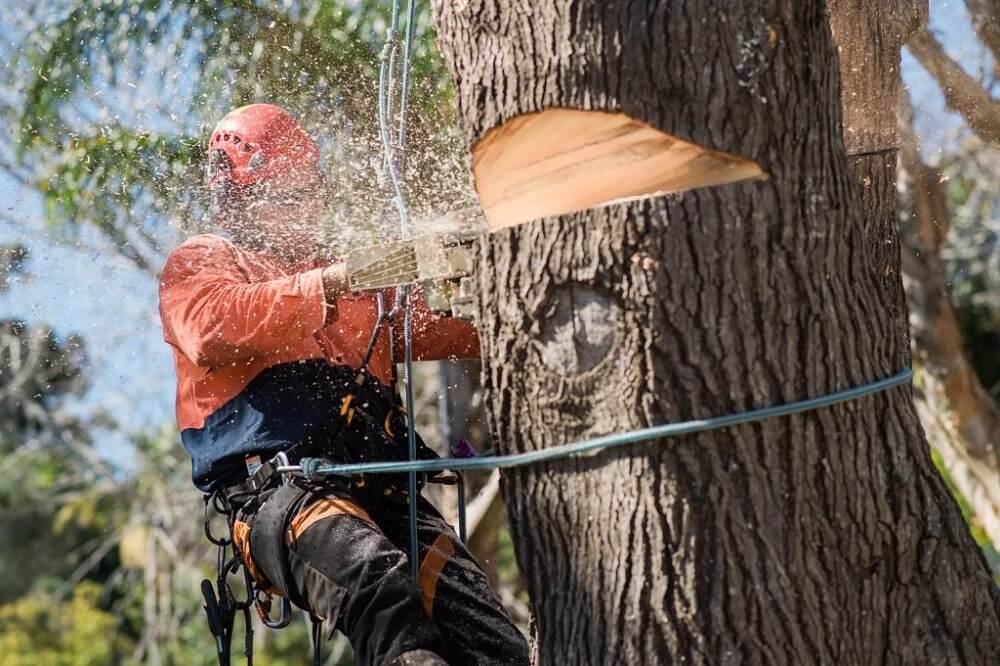
Storm-damaged trees behave unpredictably because the wood can be under tension and compression. Cuts can cause the trunk to roll, limbs to spring, or the tree to shift suddenly, even if it looks stable.
Ladders, chainsaws, and wet ground are a dangerous mix for non-professionals. DIY work can also create liability if debris falls onto a neighbour’s property or the public highway, and insurers may question claims linked to unsafe actions. Learn the key differences between professional tree removal services and DIY tree removal risks.
Who is responsible if a tree falls onto a neighbour’s property?
Responsibility depends on where the tree stood and whether it was reasonably maintained. If the tree was clearly unsafe beforehand and the homeowner ignored obvious signs, they could be found negligent.
In many everyday scenarios, storm events are treated as “acts of nature”, and each party claims on their own insurance. They should document pre-storm conditions if possible and keep records of inspections or prior work.
Will insurance cover storm-damaged tree removal?
Many UK home insurance policies cover removal when a tree damages an insured structure, such as a house, garage, boundary wall, or driveway. Cover for “fallen tree removal” without damage is often limited, optional, or excluded.
They should read the policy wording and call the insurer before authorising major work, unless it is necessary to prevent further damage. Insurers may require photos, an arborist report, or receipts from an accredited contractor. Click here to get more about claims regarding storm-damaged trees on public land.
Do they need permission to remove a storm damaged tree?
They may need permission even after storm damage. Trees protected by a Tree Preservation Order (TPO) or located in a conservation area can require council consent before pruning or removal.
There is an exception for making a tree safe, but it still usually requires evidence and prompt notification to the local planning authority. They should ask the contractor to check protection status and keep written confirmation of any emergency works justification. You may also visit https://newcastle.nsw.gov.au/about-us/forms-and-publications/forms-and-permits/report-storm-damage-tree-removal-form to learn the requirements to report trees removed due to storm damage.
How should they choose a contractor for storm damage removals?
They should use a qualified, insured arborist rather than a “man with a saw”. A reputable contractor will explain the plan, identify hazards, and provide a written quote.
They should ask for proof of public liability insurance, relevant training, and whether waste removal and stump treatment are included. If access is tight or near buildings, they should expect rigging, controlled lowering, and possibly traffic or pavement management.
What questions should they ask before work starts?
They should ask what will be removed and what will be left, including whether the stump will be ground out. They should also ask who is responsible for checking TPO or conservation restrictions, and whether the price includes removing all arisings.
If the tree is near utilities, they should ask what safety steps will be used and whether the provider needs to isolate lines. They should confirm start date, timescale, and what happens if further defects are discovered mid-job.
What should they expect the removal process to involve?
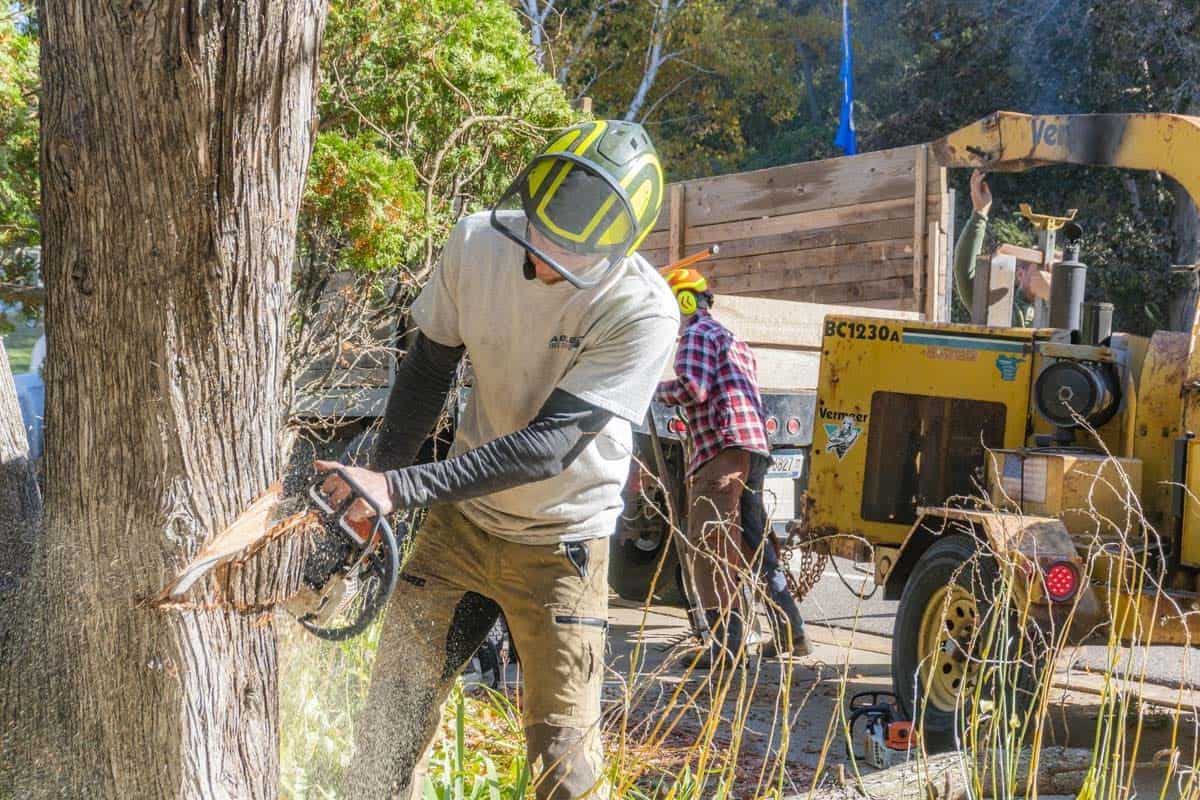
A proper storm damage removal usually starts with a site risk assessment. The contractor may cordon off areas, set anchor points, and remove unstable limbs first to reduce danger.
In confined spaces, the tree is typically dismantled in sections and lowered with ropes to avoid damaging roofs, fences, or gardens. If the tree has failed at the root plate, machinery may be used, but only where ground conditions allow.
What happens to the stump and roots afterwards?
They usually have three options: leave the stump, grind it below ground level, or remove it fully. Stump grinding is the most common because it is quicker and less disruptive than excavation.
If replanting is planned, grinding helps create space, but they may need fresh topsoil. If the tree failed due to root decay, the contractor may recommend checking nearby trees for similar issues, especially in the same soil conditions.
How can they reduce the chance of future storm-related removals?
They can reduce risk by arranging periodic inspections, particularly for mature trees near buildings or roads. Early action like crown thinning, deadwood removal, and correcting weak unions can prevent failures.
They should also watch for warning signs: fungi at the base, cracks, cavities, sudden dieback, or soil lifting after high winds. Planting the right species in the right place, with room to grow, lowers long-term storm vulnerability.
What should they do if access is blocked and clean-up is urgent?
They should clear only light debris they can move safely, without climbing or cutting overhead limbs. Anything under tension, hung up in the canopy, or resting on structures should be left to professionals.
If the tree blocks a public road or footpath, they should contact the local council or highways authority for guidance, especially if traffic management is needed. They should continue documenting the condition until the site is made safe.
What is the simplest safe plan homeowners can follow?
They should prioritise safety, documentation, and expert advice. Keep away from hazards, photograph everything, contact insurers when practical, and hire a qualified, insured arborist who can handle permissions and controlled removal.
Storm damage is stressful, but the right sequence prevents injuries, avoids legal trouble, and usually reduces the final cost.
FAQs (Frequently Asked Questions)
What immediate steps should homeowners take after storm damage to a tree?
Homeowners should treat the area as dangerous until proven safe by keeping people and pets away, especially if branches are hanging, the trunk is split, or the tree is leaning. If there are downed power lines or the tree touches cables, they must call the electricity network operator or emergency services and stay well clear. Taking clear photos from a safe distance for insurance purposes before moving anything is also essential.
How can one determine whether a storm-damaged tree requires removal or just pruning?
Removal is likely if the trunk is cracked, roots are lifted, or the tree has developed a sudden lean. A large loss of canopy can also make a tree unstable over weeks. Pruning suffices when damage is limited to small or medium limbs with a sound main structure. A qualified arborist should assess whether selective cuts can make the tree safe instead of full removal.
When is storm damage to trees considered an emergency situation?
It is an emergency when there is an immediate risk to life or major property, such as a tree blocking an exit, resting on a roof, threatening public pavements, or entangled with overhead lines. Urgency also applies if the tree has split stems, heaving at the base, or large suspended limbs. Waiting for better weather in these cases may worsen risks and costs.
What are the risks associated with DIY tree removal after storm damage?
Storm-damaged trees behave unpredictably due to tension and compression in wood; cuts can cause sudden rolling, springing limbs, or shifting even if stable-looking. Using ladders and chainsaws on wet ground poses dangers for non-professionals. DIY removal can create liability if debris falls on neighbours’ properties or public areas, and insurers may question claims linked to unsafe actions.
Is permission required to remove a storm-damaged tree?
Permission may be needed even after storm damage. Trees protected by Tree Preservation Orders (TPOs) or located in conservation areas often require council consent before pruning or removal. An exception exists for making a tree safe but usually requires evidence and prompt notification to local authorities. Contractors should verify protection status and keep written confirmation of emergency work justification.
Will home insurance cover the cost of removing storm-damaged trees?
Many UK home insurance policies cover removal when a tree damages insured structures like houses, garages, boundary walls, or driveways. Coverage for fallen tree removal without damage tends to be limited, optional, or excluded. Homeowners should review policy wording carefully and contact their insurer before authorising major work unless necessary to prevent further damage; insurers may request photos, arborist reports, or receipts from accredited contractors.
This guide walks through what usually happens at each stage, so homeowners know what to expect, what to ask, and how to prepare.
What happens when homeowners first book a pest control visit?
They usually start with a short call or online form where the company gathers the basics: the pest type (or suspected pest), what has been seen, where activity is happening, and how urgent the issue feels. For concerns related to termites, termite pest control Sydney specialists will also ask about signs such as mud tubes, hollow timber, or recent swarmers.
They may also ask about pets, children, allergies, and whether anyone is pregnant, so the technician providing termite pest control Sydney can plan appropriate products and methods.
After that, they provide an appointment window and explain any pre-visit steps, such as clearing under sinks, moving furniture slightly away from walls, or securing pets.
What questions do pest controllers typically ask before arriving?
They tend to ask questions that help them avoid guesswork. That includes when the issue started, whether it is getting worse, what times pests are seen, and whether any DIY treatments have been used already. They may ask for photos of droppings, damage, nests, insects, or entry points to speed up identification.
They also often ask about the property itself, such as whether it is a house, terrace, flat, or duplex, and whether there is a subfloor, roof void, garden, or adjoining walls with neighbours.
How do they inspect a home once they are on-site?
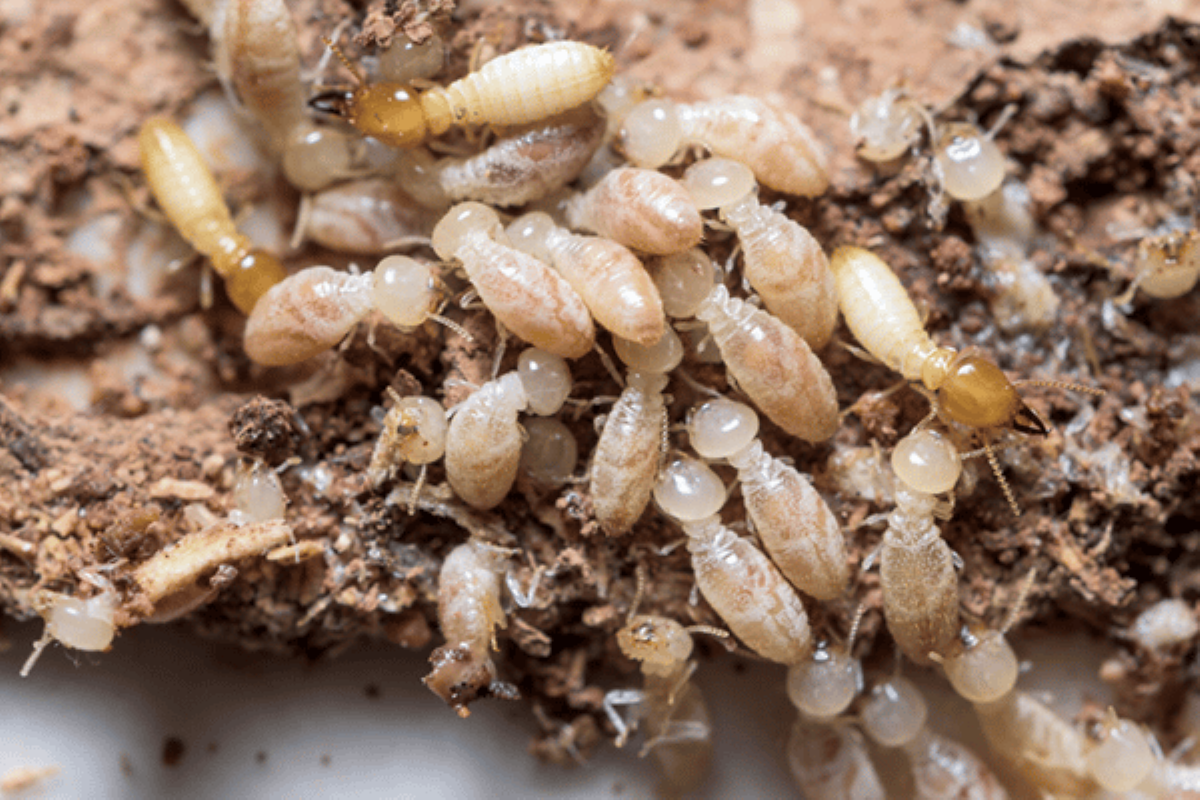
They usually begin by confirming the symptoms with the homeowner and checking the most likely hotspots. For cockroaches, that might mean kitchens, laundries, and bathrooms. For rodents, it is commonly roof spaces, garages, and wall cavities. For termites, they often focus on moisture-prone areas and timber structures, then expand outward.
A proper inspection typically includes looking for entry points, nesting sites, food and water sources, and signs of travel like rub marks, grease marks, mud tubes, droppings, or shed wings. They also consider environmental factors, like leaking taps, garden mulch against walls, or stored items that create shelter.
How do they identify the pest and choose the right treatment?
They match the pest species and behaviour to a targeted method rather than using a one-size-fits-all spray. That matters because different pests respond to different strategies. For example, baiting may be more effective than surface spraying for certain cockroach species, while exclusion work and trapping may be central for rodents.
They also factor in the property’s layout, level of infestation, access to harbourage areas, and risk profile for children and pets. From there, they explain what they recommend, what it will achieve, and what limits exist, especially when infestations are advanced or access is restricted.
What does a typical treatment actually involve?
Most treatments are a combination of actions rather than a single step. They may apply targeted insecticides, place gel baits, install monitoring stations, dust voids, set traps, or use foam in hard-to-reach cavities. For ants, they may use slow-acting baits designed to reach the nest. For spiders, they often focus on web removal and perimeter treatments paired with habitat reduction.
They also usually treat the “why”, not just the “what”, by addressing entry points, moisture, clutter, and food access. In many homes, small changes like sealing gaps, storing food properly, and fixing leaks can make a major difference.
How do they manage safety for children, pets, and indoor air quality?
They typically select products and placement methods that reduce exposure, such as applying baits in cracks and crevices, using low-odour formulations, and avoiding unnecessary broad spraying in living areas. They also give clear instructions on what to keep away from treated zones, and for how long.
Homeowners are normally advised to keep pets out of the treatment area during application and to follow any re-entry time guidance. If aquariums, bird cages, or sensitive pets are present, they usually plan around them with extra precautions like covering tanks, turning off aeration briefly if required, and increasing ventilation.
What should homeowners do before and after the treatment?
Before the visit, they can speed things up by tidying the problem areas and making access easy. That often means clearing under sinks, removing items from the backs of cupboards, and moving bins so technicians can inspect and treat properly. For fleas or rodents, they may advise extra preparation, such as vacuuming thoroughly or removing pet bedding for washing.
After treatment, they usually recommend avoiding deep cleaning in treated zones for a set period so products can keep working. They may also advise ongoing hygiene steps, sealing cracks, reducing clutter, trimming vegetation away from the house, and storing food in sealed containers. For detailed building standards and prevention methods, see this guide on termite risk management in housing and site preparation.
How do they handle follow-ups, warranties, and ongoing prevention?
They often provide a written report or service summary explaining what was found, what was done, and what to monitor next. Many services include a follow-up window or warranty period for certain pests, where they will return if activity persists. Homeowners should check what is covered, what conditions apply, and whether ongoing issues can be linked to access limitations or reinfestation from neighbouring properties.
For high-risk pests or recurring problems, they may recommend a scheduled maintenance plan. That typically focuses on monitoring and prevention, such as routine inspections, seasonal treatments, and targeted bait station checks.
What results should homeowners realistically expect, and how soon?
They often see improvement quickly, but timing depends on the pest and method used. Some pests, like cockroaches treated with baits, can appear more active initially as they contact the product and move within harbourage areas. Rodent control can also take time if there are multiple entry points or a steady food source nearby.
A reliable service sets expectations clearly: what “normal” post-treatment activity looks like, what signs suggest success, and when a return visit is appropriate. When homeowners follow preparation and aftercare guidance, results are usually faster and longer-lasting.
What should I expect when I first book a pest control service in Sydney?
When you first book a pest control visit, the company will typically start with a short call or online form to gather basic information such as the type of pest, location of activity, urgency, and household details like pets or allergies. They will then provide an appointment window and advise on any pre-visit preparations like clearing areas or securing pets.
What information do pest controllers usually ask for before arriving at my home?
Pest controllers often ask about when the issue started, whether it’s worsening, times pests are seen, and any DIY treatments used. They may request photos of droppings or damage to aid identification and inquire about your property type and features like gardens or adjoining walls to tailor their approach.
How is my home inspected during a pest control visit?
Technicians confirm symptoms with you and inspect likely hotspots depending on the pest—kitchens for cockroaches, roof spaces for rodents, moisture-prone timber areas for termites. They look for entry points, nesting sites, food/water sources, signs like droppings or mud tubes, and environmental factors contributing to infestations.
How do professionals identify pests and decide on the most effective treatment?
Pest controllers match the specific pest species and behaviour to targeted methods rather than generic sprays. They consider infestation level, property layout, access to harbourage areas, and safety risks to children or pets before recommending tailored treatments such as baiting, trapping, exclusion work, or insecticides.
What safety measures are taken regarding children, pets, and indoor air quality during treatments?
Products and application methods are chosen to minimise exposure—using baits in cracks rather than broad sprays—and clear instructions are provided on keeping away from treated zones. Extra precautions are taken around sensitive pets or aquariums by covering tanks and enhancing ventilation to maintain indoor air quality.
What follow-up care should I expect after pest treatment?
After treatment, you should avoid deep cleaning treated areas for a set time to allow products to work effectively. Pest control services often include follow-up visits or warranties if pests persist. Ongoing prevention advice includes sealing gaps, reducing clutter, trimming vegetation away from your home, and storing food securely to maintain long-term results.
Tree removal looks simple from the ground: a few cuts, a planned drop, job done. In reality, it is one of the most injury-prone tasks around a home, and it is also one of the easiest ways to damage roofs, fences, cars, drains, and power lines.
So which route is safer and faster: hiring a tree removal company, or doing it DIY? It depends on the tree, the site, and the person’s experience, but in most real gardens, professionals win on both safety and speed.
Is DIY tree removal ever the safer option?
Rarely, but it can be when the job is genuinely small and simple. If they are removing a very small tree or a thin, self-seeded sapling with clear space all around, DIY can be safe with basic hand tools and sensible precautions.
The moment a tree is tall, heavy, leaning, close to structures, or has dead limbs, the risk jumps sharply. In those cases, DIY becomes the less safe option, even for confident homeowners.
Why is a tree removal company usually safer?
A reputable tree removal company reduces risk through training, equipment, and process. They typically assess lean, canopy weight, decay, drop zone, and access before they cut anything, then choose a method that limits uncontrolled movement.
They also work with proper PPE and rigging systems designed for controlled dismantling. That matters because most serious incidents come from falling limbs, kickback, ladders, and trees behaving differently than expected once fibres start to fail. Learn why hiring certified arborists for safe tree removal reduces risks from falling limbs, equipment failure, and unpredictable tree movement.
What makes DIY tree removal risky in typical gardens?
Most gardens are constrained spaces with hidden hazards. They may have sheds, greenhouses, neighbouring fences, overhead cables, uneven ground, and limited drop zones, all of which increase the odds of a mistake turning into damage or injury.
DIYers also tend to underestimate weight and tension. A branch that looks manageable can weigh far more than expected, and a cut limb can swing, roll, or rebound in ways that are hard to predict without experience. For more information on tree removal protection visit https://www.safework.nsw.gov.au/hazards-a-z/tree-trimming-removal-and-arborist-work.
Which option is faster for most people?
A tree removal company is usually faster from first cut to final clear-up, especially on medium to large trees. They arrive with a plan, a team, and the right kit to dismantle and remove timber efficiently.
DIY can be slower even on modest jobs because they may need to buy or hire tools, set up safely, stop to reassess, and then spend far longer cutting, dragging, stacking, and disposing of waste.
Does stump removal change the time comparison?
Yes, significantly. Many people focus on felling the tree and forget that the stump can be the most time-consuming part if they want it gone, not just cut low.
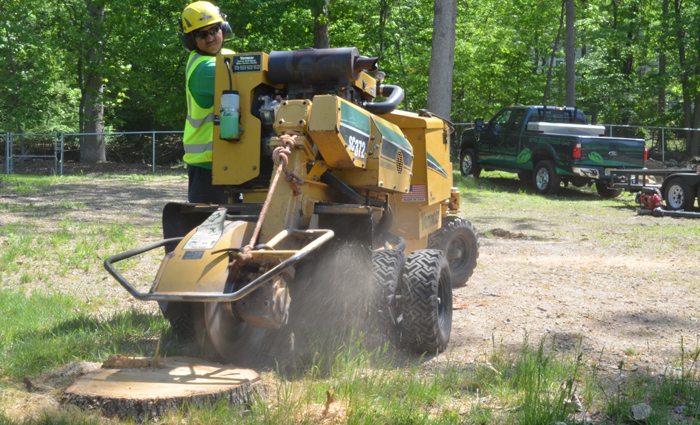
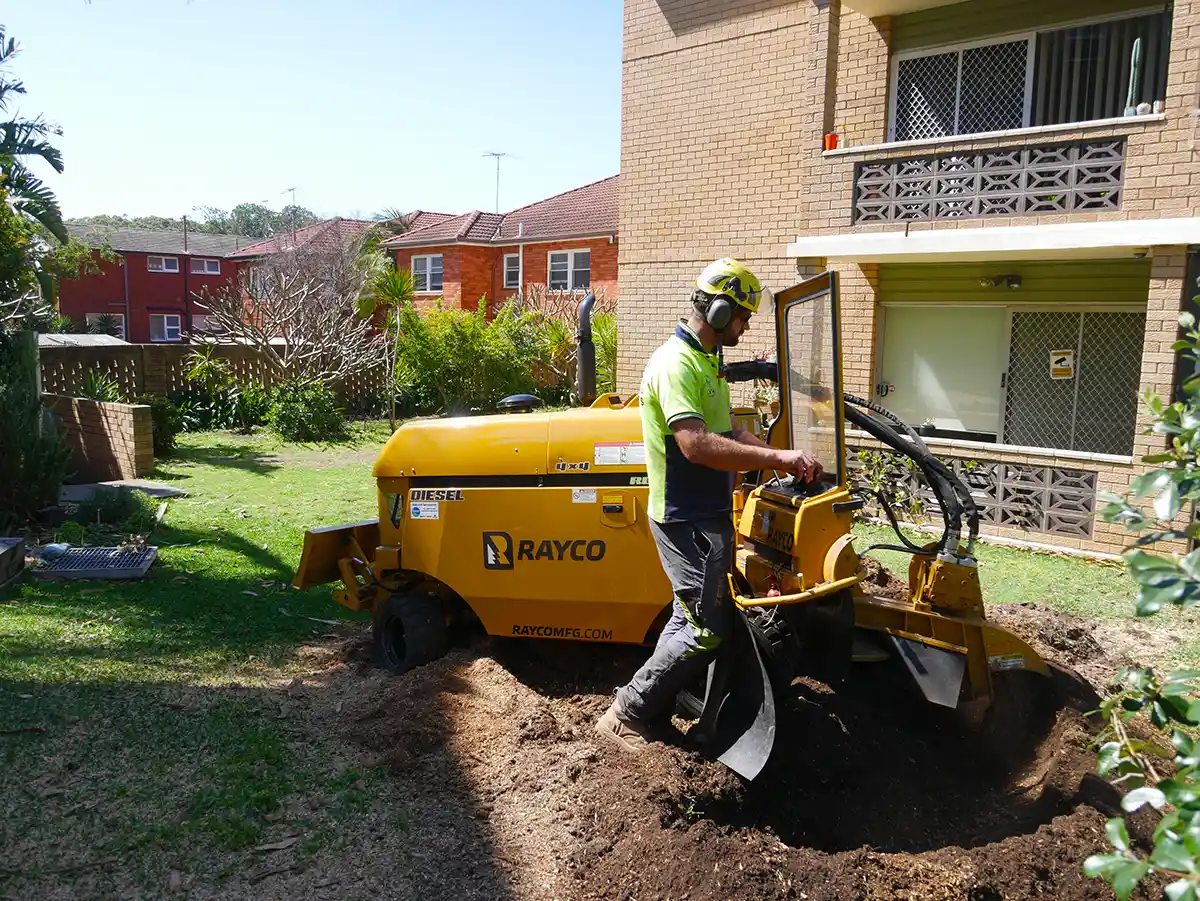
Professionals can stump grind quickly with purpose-built machines, while DIY stump removal is often hours or days of digging, cutting roots, and struggling with soil and stones. If speed matters, stump grinding is usually the tipping point.
What tools and skills do DIYers typically underestimate?
Chainsaw skill is the big one, but it is not the only one. Safe felling involves understanding notch cuts, back cuts, hinge wood, bar pinch, tension and compression, and escape routes, plus how to deal with hang-ups.
They also often underestimate access equipment needs. Ladders and improvised platforms are common in DIY accidents, and many jobs that look like “just a bit higher” actually require climbing and controlled rigging to do safely. Click here to get more about tree removal’s skills and tools.
How do costs compare once time and risk are included?
DIY can look cheaper on paper, especially if they already own tools. But costs add up through tool hire or purchase, PPE, waste removal, stump handling, and potential repairs if something goes wrong.
Professional quotes can feel higher upfront, yet they often include labour, equipment, insurance, and disposal. For many households, avoiding one damaged fence panel, cracked patio slab, or dented vehicle can offset the apparent DIY savings.
When is hiring a tree removal company the clear choice?
It is the clear choice when the tree is large, dead, leaning, near buildings, overhanging roads or neighbours, or close to power lines. It is also the better choice if there is limited drop space, poor access, or the ground is sloped or unstable.
If they are unsure about the tree’s condition, a professional assessment is usually the safest first step. Decay, cavities, and split unions can turn a “normal” fell into a highly unpredictable one.
What are the most common safety mistakes with DIY removal?
The most common mistakes are poor planning and rushing the cut. DIYers often skip a proper drop zone, fail to plan an escape route, cut above shoulder height, or work too close to the fall line.
Another frequent error is attempting to free a hung-up tree by cutting more wood from below or pushing from unsafe positions. That is where sudden releases and “barber chair” splits can cause serious injuries.
How can they decide quickly which option suits their tree?
A practical rule is this: if they cannot fell it safely in one clean direction with a wide, clear landing area, it is usually not a DIY job. If it needs piecing down, rigging, climbing, or work near targets, professionals are the safer and quicker route.
If they still want to DIY, they should limit it to small trees, use correct PPE, keep helpers well back, and have a disposal plan. In most cases, hiring a tree removal company remains the safer, quicker path from problem tree to tidy garden.
FAQs (Frequently Asked Questions)
Is DIY tree removal ever the safer option?
DIY tree removal can be safe when dealing with very small or thin saplings with clear space all around, using basic hand tools and sensible precautions. However, for tall, heavy, leaning trees or those close to structures or with dead limbs, DIY becomes significantly riskier.
Why is hiring a tree removal company usually safer than DIY?
Professional tree removal companies reduce risks through specialized training, proper equipment, and thorough assessment of factors like tree lean, canopy weight, decay, and drop zones. They use PPE and controlled dismantling techniques to prevent accidents caused by falling limbs or unexpected tree behaviour.
What makes DIY tree removal risky in typical gardens?
Gardens often have constrained spaces with hidden hazards such as sheds, fences, overhead cables, uneven ground, and limited drop zones. DIYers may underestimate the weight and tension in branches, leading to unpredictable swings or rebounds that increase the risk of injury or property damage.
Which option is faster for most people: DIY or professional tree removal?
Tree removal companies are generally faster due to their experience, team coordination, and specialised equipment. DIY jobs tend to take longer because of tool acquisition, safety setup, reassessment pauses, and the time-consuming process of cutting, dragging, stacking, and waste disposal.
Does stump removal affect the time comparison between DIY and professional services?
Yes. Stump removal can be very time-consuming for DIYers who must dig out roots manually. Professionals use stump grinding machines that quickly remove stumps. Therefore, if stump removal is required, hiring a company usually saves significant time.
When should you definitely hire a professional tree removal service?
Hiring professionals is advisable when the tree is large, dead, leaning dangerously close to buildings or power lines, overhanging roads or neighbours’ property, or situated on sloped or unstable ground. Also consider professionals if access is poor or if the tree shows signs of decay or structural weakness.
What matters most is this: a good treatment should stop the current colony and reduce the chance of re-infestation, but ongoing monitoring is what keeps protection in place.
How long does termite treatment last in real homes?
Most professional pest control termite treatment solutions last anywhere from 1 to 10+ years, depending on the approach. Some methods are designed as long-term barriers, while others work as an ongoing elimination and monitoring system.
A homeowner should not judge the success of a pest control termite treatment only by “no visible termites.” They should also judge it by whether the treatment is still intact, regularly inspected, and supported by a clear warranty or service plan.
Which termite treatment type lasts the longest?
In many cases, a professionally applied chemical soil barrier can offer the longest single “set-and-protect” window. Baiting systems can also provide long-term protection, but only if they are continuously serviced and replenished.
The longest-lasting option is usually the one that matches the property. A method that is ideal for one home can be less durable for another because of drainage, landscaping, or building design.
How long do liquid soil (chemical barrier) treatments last?
A high-quality soil treatment commonly lasts 5 to 10 years, sometimes longer under ideal conditions. Its durability depends heavily on whether the treated soil stays undisturbed around the foundation.
Any digging, major landscaping, new paving, or plumbing work can break the barrier. If the barrier is compromised, termites may find an untreated gap and re-enter without needing to “defeat” the chemical.
How long do termite bait stations last?
Bait stations can protect a property for as long as they are maintained, because the system is designed to be inspected and refreshed. The bait itself is not a permanent “one-time” product, so the protection is tied to regular service visits.
They work well where a continuous soil barrier is difficult, but they require patience. A baiting strategy may take longer to eliminate a colony than some liquid applications, especially in high-pressure areas.
How long do wood treatments and foams last?
Wood treatments, foams, and dusts can last months to several years, depending on the product and where it is applied. They are often used for targeted activity in timber or wall voids rather than whole-property prevention.
They can be excellent for localised control, but they are not always a substitute for treating the ground around the building. If termites remain active in the soil, they can simply attack a different entry point.
What factors shorten the life of termite treatment?
The most common reasons treatments fail early are moisture issues, soil disturbance, and untreated access points. Termites thrive where there is consistent dampness, leaking pipes, poor drainage, or timber-to-soil contact.
Even a strong treatment can be undermined if the property has hidden conditions that keep inviting termites back. That is why many professionals focus as much on “conducive conditions” as on chemicals.
Does the climate and soil type change how long treatment lasts?
Yes, climate and soil can significantly affect longevity. Heavy rainfall, flooding, very sandy soils, and areas with frequent ground movement can reduce how long a barrier remains consistent.
Local termite pressure also matters. In regions with aggressive, high-density termite populations, a property may need tighter inspection intervals and faster follow-up if any weakness appears.
How can someone tell if a treatment is still working?
They cannot reliably tell just by looking, because termites often stay hidden until damage is advanced. The most dependable way is through scheduled inspections and, where relevant, bait station checks or monitoring devices.
If termite mud tubes reappear, winged swarmers are found indoors, or new timber damage is noticed, they should treat it as urgent. It might not mean the entire treatment has failed, but it does mean something needs attention quickly.
How often should a property be inspected after termite treatment?
Most properties benefit from an inspection at least once a year, and sometimes more often in high-risk locations. Inspections help confirm the barrier has not been disturbed and that moisture conditions have not changed.
If a property has a history of termites, ongoing renovation work, or persistent damp issues, more frequent inspections can prevent expensive surprises.
Do warranties mean the treatment will last that long?
A warranty usually means the company will re-treat or repair under certain conditions, not that termites are impossible during the warranty period. It is a service promise with rules, not a guarantee of zero termite activity.
They should read the terms closely. Some warranties require annual inspections, proof of maintenance, or exclusions for building changes and water leaks.
What can homeowners do to make termite treatment last longer?
They can extend protection by removing the conditions termites love. Simple changes such as fixing leaks, improving drainage, keeping subfloors ventilated, and ensuring timber does not touch soil can make a major difference.
They should also avoid disturbing treated soil near the foundation. If work is required, it is worth asking the pest controller how to protect or re-establish the treated zone afterwards. Learn more about termite control.
When should termite treatment be repeated?
Treatment should be repeated when inspections show the barrier has been disrupted, bait stations need continued servicing, or new activity is detected. It may also be recommended after major plumbing or landscaping projects that affect the perimeter soil.
The safest approach is not guessing by time alone. They should base the decision on inspection findings, local termite risk, and whether the original protection method is still intact.
What is the realistic takeaway on how long termite treatment lasts?
Termite treatment can last years, but only if it suits the property and it is supported by inspections and upkeep. Chemical barriers often provide longer “set” protection, while baiting provides long-term coverage through ongoing monitoring.
If they want the most realistic answer for a specific home, they should ask for the treatment type, expected lifespan in local conditions, inspection frequency, and what actions could void or weaken the protection. That clarity is what turns a treatment into lasting prevention.
How long does termite treatment typically last in residential properties?
Most professional termite treatments last between 1 to 10+ years, depending on the method used. The longevity varies with treatment type, soil conditions, moisture levels, construction features, and termite activity in the area. Regular maintenance and inspections are essential to sustain protection.
Which termite treatment method offers the longest-lasting protection?
A professionally applied chemical soil barrier often provides the longest single ‘set-and-protect’ period, typically lasting 5 to 10 years under ideal conditions. Baiting systems can also offer long-term protection but require continuous servicing and replenishment to remain effective.
What factors can reduce the effectiveness and lifespan of termite treatments?
Common factors that shorten termite treatment life include moisture problems (like leaking pipes or poor drainage), soil disturbance (from landscaping or construction), and untreated access points. These conditions create conducive environments for termites, undermining even strong treatments.
How important are inspections in maintaining termite treatment effectiveness?
Scheduled inspections, usually at least once a year, are crucial to confirm that the treatment barrier remains intact and that environmental conditions have not changed. Inspections help detect early signs of termite activity such as mud tubes or timber damage, enabling timely intervention to maintain protection.
Does a warranty guarantee that termite treatment will prevent infestations during its term?
No, a warranty generally means the pest control company will re-treat or repair under specified conditions but does not guarantee zero termite activity. Warranties often require annual inspections and proper maintenance; homeowners should carefully read terms to understand coverage and obligations.
What steps can homeowners take to extend the life of termite treatments?
Homeowners can prolong treatment effectiveness by eliminating conducive conditions: fixing leaks, improving drainage, ensuring good subfloor ventilation, preventing timber-to-soil contact, and avoiding disturbance of treated soil near foundations. Consulting pest professionals before landscaping or plumbing work helps protect the treated zone.
Understanding the tree removal costs in 2026 is essential for Australian homeowners planning property maintenance or emergency clearing. As urban canopy protections tighten and operational overheads for arborists rise, budgeting for professional tree services requires a clear grasp of height, species, and site accessibility.
In this comprehensive 2026 price guide, we break down the national averages and the specific variables—from hardwood disposal to council permits—that will determine your final quote.
What Determines the Cost of Tree Removal in Australia?
Tree removal is rarely a “flat fee” service. Because every job involves unique risks to property and personnel, arborists calculate quotes based on the total resources required to safely dismantle and dispose of the specimen.
Core Pricing Factors
Tree Height & Canopy Spread: The primary driver of cost. Taller trees require more rigging, more time, and often specialized climbing or aerial equipment.
Site Accessibility: If a tree is in a tight backyard with no side access, crews must manually carry timber or use expensive cranes, significantly increasing the price.
Tree Condition: Dead or decaying trees are often more dangerous to climb, necessitating more complex safety protocols.
Waste Disposal: The volume of “green waste” produced can be immense. Hardwood is heavier and more expensive to transport than softwood or palm fibers.
Tree Removal Cost Breakdown by Size (2026 Estimates)
To help you estimate your project, we have categorized typical Australian tree removals into four size tiers. These prices reflect national 2026 averages for standard residential removals.
2026 Tree Removal Price Table
Tree Size
Height Range
Average Price (AUD)
Common Examples
Small
Up to 6m
$350 – $950
Bottlebrush, Lilly Pilly, Large Shrubs
Medium
6m – 12m
$1,000 – $2,800
Jacarandas, Frangipanis, Wattle
Large
12m – 20m
$3,000 – $7,500
Mature Gums, Pines, Stringybarks
Extra-Large
20m+
$8,000 – $20,000+
Giant Eucalyptus, Moreton Bay Figs
Note: These estimates generally include felling and chipping but may not include stump grinding or council application fees.
Why 2026 Costs Differ: Hardwood vs. Softwood and Palms
The species of your tree plays a massive role in the labor intensity of the job.
Hardwood (e.g., Eucalyptus, Ironbark)
Australian hardwoods are notoriously dense. They dull chainsaw chains quickly and are incredibly heavy to move. Removing a 15-meter Gum tree requires significantly more physical labor and fuel than a softwood tree of the same size.
Softwood (e.g., Pine, Cedar)
While easier to cut, softwoods like Pines often produce more sticky resin and higher volumes of foliage, which can fill up woodchipper trucks rapidly, leading to higher disposal frequency.
Palm Trees
Palms are unique because they cannot be processed through standard woodchippers. Their fibrous trunks must be cut into “rounds” and hauled away to specific landfill sites, which often charge a premium for palm waste.
Hidden Costs: Permits, Reports, and Stump Grinding
When budgeting for tree removal costs in 2026, the “on-ground” work is only part of the equation.
1. Council Permits and Arborist Reports
Most Australian LGAs (Local Government Areas) have strict Tree Preservation Orders (TPOs).
Application Fees: Usually range from $75 to $250.
Arborist Reports: If the tree is healthy but you want it removed for construction, the council may require a “Level 5 Arborist Report.” These typically cost between $450 and $700.
2. Stump Grinding
Removing the tree above ground does not include the stump.
Small Stumps: $150 – $300.
Large/Complex Stumps: $500 – $1,200+.
Tip: Ask for a “combined quote” to save approximately 15% on stump services.
3. Equipment Surcharges
If your tree is inaccessible by foot, your arborist may need to hire:
Cherry Picker (EWP): Adds $500 – $1,000 per day.
Crane: For extra-large trees over houses, crane hire can add $2,000 – $5,000 to the total bill.
How the Tree Removal Process Works
Understanding the workflow helps you see where your money is going. A professional 2026 tree removal follows these steps:
Site Assessment: Identifying “drop zones” and obstacles (fences, power lines).
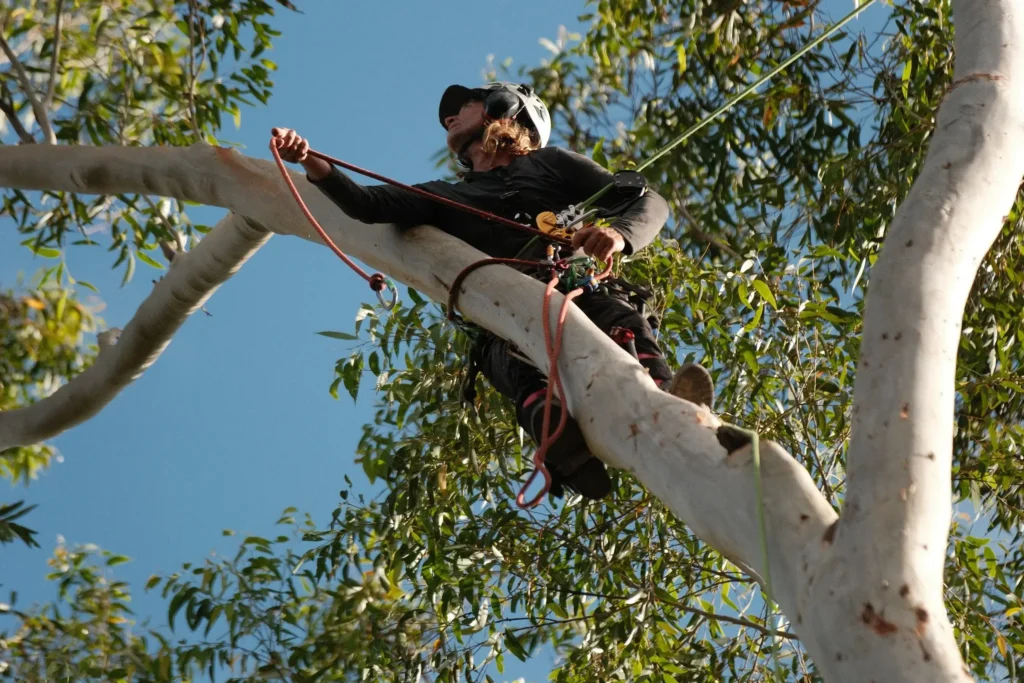
Rigging & Climbing: An arborist climbs the tree and uses ropes to lower branches safely.
Sectional Felling: The trunk is cut into manageable “biscuits.”
Processing: Branches go through a woodchipper; logs are loaded onto a truck.
Clean-up: The site is raked and cleared of sawdust and debris.
Best Practices for Lowering Your Costs
While you should never compromise on safety, there are ways to minimize the financial impact:
Keep the Mulch: If you have a garden, ask the arborist to leave the woodchips behind. This can save you $100–$200 in disposal fees.
Curb-side Access: If you can clear your driveway or move vehicles to allow the chipper truck closer to the tree, you reduce labor hours.
Seasonal Timing: Booking in late winter (outside of storm season) may result in more competitive quotes as demand is lower.
Group Work: If you and a neighbor both need trees removed, booking the crew for one full day is cheaper than two separate call-outs.
Common Mistakes to Avoid
Hiring Uninsured “Tradies”: Tree removal is high-risk. Ensure your provider has at least $10M (preferably $20M) in Public Liability Insurance.
Illegal Removal: Fines for removing protected trees in NSW, VIC, or QLD can exceed $20,000 per tree in 2026. Always verify council rules first.
Ignoring the “Price vs. Value” Trap: The cheapest quote often lacks proper waste disposal or insurance, leaving you liable for damages.
Frequently Asked Questions (FAQ)
How much does it cost to remove a tree near power lines?
Working near power lines requires a “Level 2” accredited arborist and often a specialized spotter. This typically adds 20% to 50% to the standard removal cost due to the increased risk and regulatory compliance.
Is stump removal always included in the price?
No. In Australia, tree removal and stump grinding are usually quoted as separate line items. Always clarify if the “tree removal” quote includes “taking it to ground level” or “complete root removal.”
Do I need a permit for a dead tree?
In many councils, dead or “imminently dangerous” trees are exempt from permit requirements. However, you must still provide photographic evidence or a brief letter from an arborist to avoid potential fines.
What is the average cost of an arborist report in 2026?
A standard residential arborist report for 1–3 trees currently costs between $450 and $650. Prices vary based on the level of detail required by your local council.
Can I save money by cutting the tree myself?
DIY tree removal is highly discouraged for any specimen over 3 meters. The risk of property damage, power line interference, and personal injury far outweighs the potential savings.
Conclusion: Planning Your 2026 Tree Removal
Navigating tree removal costs in 2026 requires a balance of professional expertise and local regulatory knowledge. While a small tree might only set you back a few hundred dollars, large-scale removals for Gums or Pines require significant investment due to the specialized equipment and labor involved.
By understanding the tiered pricing structures and the impact of factors like accessibility and hardwood disposal, you can approach contractors with confidence and ensure your property remains safe and compliant.
Would you like me to help you draft a checklist for interviewing local arborists to ensure they are fully insured and compliant with 2026 standards?
Internal & External Reference Suggestions:
Internal Link Suggestion:Guide to Australian Native Tree Protection Laws
Internal Link Suggestion:Stump Grinding vs. Total Root Extraction: Which is Better?
External Reference: Refer to Arboriculture Australia for industry-standard safety and qualification guidelines.
Ordering funeral flowers with care in Sydney means choosing arrangements that genuinely honour a loved one’s memory whilst providing comfort to grieving families. The right florist understands that these aren’t ordinary flowers—they’re tangible expressions of sympathy during life’s most difficult moments.
Funeral flowers Sydney services play a vital role in the bereavement process. They create a peaceful atmosphere at memorial services, offer visual comfort to mourners, and communicate feelings that words often cannot express. When families see thoughtfully arranged sympathy flowers delivery at a service, they recognise the care and respect others hold for their loss.
Provide a focal point for remembrance and reflection
Demonstrate community support during isolation and grief
Offer a meaningful way for distant friends and relatives to participate in honouring the deceased
Create lasting memories through their beauty and symbolism
The question of where to order funeral flowers delivered in Sydney with care matters because not all florists approach sympathy arrangements with the same level of compassion and attention to detail. Selecting a florist experienced in funeral services ensures arrangements arrive on time, appear exactly as intended, and convey the appropriate sentiment for such solemn occasions.
Quality funeral florists in Sydney recognise that their work directly impacts how families experience one of life’s most challenging days. They handle each order with discretion, craft arrangements by hand with genuine empathy, and deliver with the quiet professionalism that difficult circumstances demand.
What Types of Funeral Flowers Can Be Ordered for Delivery in Sydney?
Sydney florists offer six main categories of funeral arrangements, each designed to suit different preferences and service requirements.
1. Funeral Wreaths
Funeral wreaths are circular designs symbolising eternal life. They are typically created by funeral wreaths Sydney providers and range in size from 40cm to 80cm in diameter. These wreaths are crafted with fresh blooms arranged on a sturdy base.
2. Casket Sprays
Casket sprays serve as the primary floral tribute placed directly on the coffin. These elongated arrangements come in two standard formats: full-couch sprays covering the entire casket lid (approximately 150-180cm) and half-couch versions (90-120cm) designed for partially open coffins. Florists construct these pieces with a cascading design that drapes elegantly over the sides.
3. Sympathy Bouquets
Sympathy bouquets provide a more intimate expression of condolence. Hand-tied arrangements arrive ready for display in a vase, with sizes starting from modest posies (30cm) to generous presentations (60cm+). These versatile tributes suit home deliveries to grieving families or placement at memorial venues.
4. Flower Baskets
Flower baskets offer a practical alternative with their self-contained design. Woven containers hold foam-based arrangements that require no additional vase, making them ideal for immediate display. Standard basket sizes include:
Small (25-30cm diameter) – suitable for bedside tables
Medium (35-45cm) – appropriate for entrance displays
Large (50cm+) – designed as statement pieces
5. Gift Boxes
Gift boxes represent a contemporary approach to sympathy flowers. Premium blooms arrive arranged in elegant boxes, often featuring luxury roses, orchids, or mixed seasonal flowers. These sophisticated presentations typically measure between 30-40cm square and include water sources to maintain freshness.
6. Wrapped Bouquets
Traditional bouquets wrapped in cellophane or kraft paper provide another accessible option. Sydney florists prepare these arrangements in various price points, from simple single-variety bunches starting at $65 to elaborate mixed designs exceeding $200. The wrapped format allows recipients to arrange stems in their preferred vessel.
Which Flowers Are Commonly Used in Funeral Arrangements and What Do They Symbolise?
White funeral flowers meaning centres on purity, peace, and reverence, making them the most traditional choice for sympathy arrangements. White lilies, roses, chrysanthemums, and carnations appear in the majority of funeral tributes across Sydney, each carrying deep symbolic weight that resonates with grieving families.
Lilies stand as the quintessential funeral flower, with their pristine white petals representing the restored innocence of the departed soul. White roses convey reverence and honour, whilst chrysanthemums—particularly significant in many cultures—symbolise death and grief with dignity. White carnations express pure love and remembrance, creating arrangements that speak volumes without words.
Why Do Florists Recommend Soft Pastel Shades for Sympathy Tributes?
Pastel sympathy flowers offer gentle elegance that balances solemnity with warmth. Soft pink roses suggest grace and admiration, pale lavender speaks to devotion and peaceful rest, whilst cream and ivory tones provide subtle sophistication without the starkness of pure white.
These delicate hues work particularly well when the deceased was known for their gentle nature or when families prefer arrangements that feel less formal. Blush peonies, pale blue hydrangeas, and soft yellow roses create tributes that celebrate life whilst acknowledging loss. Many Sydney florists blend pastels with white flowers to achieve arrangements that feel both respectful and comforting.
What Makes Australian Native Flowers Meaningful for Funeral Services?
Australian native flowers funeral arrangements connect the tribute to the land and natural beauty of the country. Waratahs, banksias, kangaroo paw, and wattle bring distinctive textures and forms that differ markedly from traditional European funeral flowers, creating arrangements with authentic Australian character.
These natives hold particular significance for families wishing to honour someone’s connection to Australia or their love of the bush. The bold red of waratahs symbolizes strength and courage, whilst the golden wattle represents resilience and endurance. Banksias add sculptural interest and longevity, remaining beautiful throughout extended memorial services.
How Do Florists Ensure Care and Compassion in Their Funeral Flower Delivery Services?
Compassionate florists in Sydney prioritise sensitivity and respect throughout every stage of their service, from initial consultation to final delivery. They understand that funeral flowers represent more than decoration—they’re tangible expressions of love, support, and remembrance during one of life’s most challenging moments.
Handcrafted Arrangements Designed with Empathy
Each arrangement receives individual attention from skilled florists who carefully select blooms, colours, and designs that honour the deceased whilst providing comfort to grieving families. These professionals create tributes that reflect the personality and preferences of those being remembered, whether through traditional white lilies or vibrant native blooms. The handcrafted nature ensures no two arrangements are identical, allowing for meaningful personalisation that mass-produced options cannot match.
Discretion During Delivery
Discreet flower delivery forms a cornerstone of professional funeral services. Delivery personnel arrive punctually yet unobtrusively, dressed appropriately and trained to handle sensitive situations with grace. They coordinate with funeral directors, family members, or venue staff to ensure arrangements arrive at the correct location without causing disruption during services or private moments of grief.
Florists confirm delivery details multiple times before dispatch, verifying:
Correct funeral home or service location
Specific delivery timeframes requested by families
Appropriate entrance points for delivery
Any special placement instructions for the arrangement
Thoughtful Floral Design Elements
Thoughtful floral design extends beyond aesthetic appeal to incorporate symbolic meaning and practical considerations. Florists select sturdy bases for standing arrangements, secure water sources for longevity, and position flowers to remain beautiful throughout multi-day viewings. They consider venue lighting, space constraints, and how arrangements will photograph for families creating lasting memories.
Keepsake Cards for Private Messages
Every arrangement includes a keepsake card where senders can express personal condolences privately. These cards become cherished mementos for bereaved families, offering comfort long after flowers have faded. Florists handle these messages with confidentiality, ensuring handwritten or printed messages appear exactly as intended without errors or insensitive formatting.
The card service allows for:
Personalised messages up to several lines.
When Is Same-Day Funeral Flower Delivery Available in Sydney?
Same-day flower delivery Sydney services typically accept orders until 2–3 pm on weekdays for delivery the same day. This cut-off time allows florists to handcraft arrangements and coordinate deliveries to funeral homes, churches, or private residences across Sydney’s metropolitan area.
Most Sydney florists offering urgent funeral flowers Sydney require orders to be placed by early afternoon to guarantee same-day arrival. The exact cut-off varies by florist and delivery location, with some accepting orders as late as 3 pm for nearby suburbs, whilst more distant areas may require earlier booking.
Factors Affecting Same-Day Delivery Times
Several considerations influence whether same-day delivery remains possible:
Order placement time – Orders submitted before midday have the highest success rate for same-day fulfilment
Delivery location – Central Sydney suburbs receive faster service than outer metropolitan areas
Day of the week – Weekday deliveries offer more flexibility than weekend services
Funeral service timing – Specific delivery windows for funeral venues may require earlier ordering
Planning for Time-Sensitive Deliveries
When a funeral service is scheduled at short notice, contacting florists directly by phone often yields better results than online ordering alone. Many Sydney florists prioritise urgent funeral flower requests and can accommodate tight timeframes when notified of the situation’s sensitivity.
Ordering before 12 pm provides the safest margin for same-day delivery, particularly if flowers need to arrive at a specific time for a funeral service. Some florists offer guaranteed time slots for an additional fee, ensuring arrangements reach their destination before the service begins.
Weekend and public holiday deliveries may have different cut-off times or limited availability. Checking with individual florists about their specific same-day delivery policies prevents disappointment during already stressful circumstances. Click here to get more about Valentine’s Day flowers that make a lasting impression.
Where Can People Order Funeral Flowers Online with Ease in Sydney?
Specialised online florists in Sydney provide dedicated platforms for ordering funeral flowers with minimal stress during an already difficult time. These services streamline the process through intuitive websites where customers can browse sympathy arrangements, select appropriate designs, and complete their purchase within minutes.
What Makes Online Funeral Flower Ordering Simple?
Digital platforms eliminate the need for phone calls or in-person visits when emotions run high. Customers can view full-colour photographs of each arrangement, read detailed descriptions of included flowers, and compare sizes and prices at their own pace. Most online funeral flower ordering Sydney services organise their catalogues by category—wreaths, sprays, bouquets—making it straightforward to find the right tribute.
The checkout process typically requires only essential information: delivery address, preferred date, and a personal message. Many florists save customer details for future orders, further reducing effort during subsequent bereavements.
How Do Online Florists Guarantee Reliable Delivery?
Reputable Sydney florists partner with experienced couriers who understand the sensitive nature of funeral deliveries. These services track orders in real-time, providing confirmation once flowers arrive at the funeral home, church, or family residence. Drivers receive specific instructions about handling sympathy arrangements with discretion and respect.
Stress-free flower delivery extends beyond punctuality. Quality florists use protective packaging that maintains arrangement integrity during transport, ensuring flowers arrive fresh and beautifully presented. Temperature-controlled vehicles preserve blooms, particularly important during Sydney’s warmer months.
Can Arrangements Be Personalised Online?
Most platforms offer extensive customisation options:
Colour preferences: Requesting specific hues to match the deceased’s favourite shades or cultural traditions
Flower selection: Adding or removing certain blooms based on personal significance or allergies
Size adjustments: Scaling arrangements up or down depending on budget and venue space
Ribbon messages: Including printed condolence phrases on accompanying sashes
The message card feature allows senders to compose heartfelt notes privately. Character limits typically accommodate several sentences, giving space to express genuine sympathy. Some florists provide message suggestions for those struggling to find appropriate words during grief.
Advanced customisation might include incorporating the deceased’s favourite flowers, even.
Conclusion
Choosing the right florist to deliver heartfelt condolences flowers Sydney families can rely on makes a meaningful difference during bereavement. Trusted funeral florists understand the weight of these moments and handle every arrangement with the sensitivity and respect grieving families deserve.
When deciding where to order funeral flowers delivered in Sydney with care, prioritise florists who demonstrate genuine compassion through their service. Look for providers who offer:
Clear communication about delivery times and arrangements
Handcrafted designs that reflect thoughtfulness and quality
Flexible options to personalise messages and flower selections
Proven reliability in timely, discreet delivery to funeral venues
The right florist becomes a quiet support during difficult days, ensuring your gesture of sympathy arrives beautifully presented and on time. Their attention to detail—from the freshness of blooms to the careful placement of keepsake cards—speaks volumes about their commitment to honouring the deceased and comforting the bereaved.
Taking time to choose a florist who values compassion alongside craftsmanship ensures your tribute conveys exactly what words sometimes cannot. These professionals recognise that funeral flowers represent more than decoration; they embody shared grief, cherished memories, and the enduring bonds between people.
Entrust your sympathy arrangements to florists who treat each order as the significant gesture it truly is.
FAQs (Frequently Asked Questions)
Where can I order funeral flowers delivered in Sydney with care?
You can order funeral flowers delivered in Sydney with care from trusted and compassionate florists who specialise in sympathy flower delivery and condolence flower arrangements, ensuring thoughtful and discreet service during bereavement.
What types of funeral flowers are available for delivery in Sydney?
Sydney florists offer a variety of funeral flower arrangements including funeral wreaths, casket sprays, sympathy bouquets, flower baskets, gift boxes, and more. These come in typical styles and sizes suited to express heartfelt condolences.
Which flowers are commonly used in funeral arrangements and what do they symbolise?
Commonly used funeral flowers include white blooms symbolising purity and peace, soft pastel flowers for gentle elegance, and Australian native flowers which add natural beauty and local significance to the arrangements.
How do florists ensure care and compassion in their funeral flower delivery services in Sydney?
Florists in Sydney focus on attention to detail with handcrafted floral designs that convey empathy. They provide discreet flower delivery, include keepsake cards for private condolence messages, and offer thoughtful arrangements to support grieving families.
Is same-day funeral flower delivery available in Sydney?
Yes, many Sydney florists offer same-day funeral flower delivery for urgent needs. Typically, orders placed before 2–3 pm can be delivered on the same day to ensure timely support during difficult moments.
Where can people order funeral flowers online easily in Sydney?
Specialised online florists in Sydney provide stress-free ordering processes for funeral flowers. They ensure reliable delivery with care and offer options to customise arrangements or add personal messages for a meaningful tribute.
Why Is Choosing the Right Flowers Important for Making a Lasting Impression on Valentine’s Day?
The flowers you select for Valentine’s Day speak volumes before a single word is uttered. Choosing the right blooms transforms a simple gesture into an unforgettable moment that lingers in your loved one’s memory long after the petals have fallen.
Valentine’s Day flowers that make a lasting impression serve as visual poetry, communicating emotions that sometimes escape verbal expression. Each bloom carries its own symbolic weight—roses whisper of passionate devotion, whilst lilies speak of refined admiration. The wrong choice might send mixed signals or fail to capture the depth of your feelings.
Different flowers convey distinct emotional messages:
Red roses declare undying romantic love
Orchids express rare beauty and strength
Tulips symbolise perfect love and comfort
Carnations represent fascination and distinction
Lilies communicate purity and devotion
The impact extends beyond symbolism. A thoughtfully chosen bouquet demonstrates genuine effort and consideration. Recipients recognise when someone has taken time to select blooms that reflect their personality, favourite colours, or shared memories. This attention to detail creates emotional resonance that generic gifts simply cannot match.
Romantic blooms also trigger sensory experiences that embed themselves in memory. The velvety texture of rose petals, the intoxicating fragrance of stargazer lilies, or the exotic appearance of orchids all contribute to a multi-dimensional gift. These sensory elements forge stronger emotional connections, ensuring your Valentine’s Day gesture remains vivid in their mind.
The right flowers become conversation starters, photo opportunities, and cherished keepsakes. They transform ordinary spaces into romantic sanctuaries, reminding your special someone of your affection each time they glimpse the arrangement.
What Are the Most Popular Classic Valentine’s Day Flowers That Never Fail to Impress?
Classic Valentine’s flowers have earned their reputation through centuries of romantic tradition, with each bloom carrying deep symbolic meaning. Red roses reign supreme as the quintessential expression of love, whilst other timeless favourites offer equally compelling ways to convey heartfelt emotions.
Red Roses: The Eternal Symbol of Romance
Red roses have captivated lovers since ancient times, their velvety petals and rich crimson hue representing passionate love and desire. The tradition dates back to Roman mythology, where roses were associated with Venus, the goddess of love, cementing their status as romantic blooms that transcend cultural boundaries.
The enduring popularity of red roses stems from their universal recognition as declarations of deep affection. A dozen red roses remains the gold standard for Valentine’s Day gifting, though arrangements can range from a single stem to elaborate displays of 50 or more blooms. Their timeless appeal lies in their ability to communicate profound emotions without words.
Tulips: Graceful Declarations of Perfect Love
Tulips offer a softer alternative to roses whilst maintaining significant romantic symbolism. Red tulips specifically represent true love, whilst pink varieties express caring and affection. Their elegant, cup-shaped blooms and smooth stems create arrangements that feel both sophisticated and approachable.
Dutch tradition holds tulips in particularly high regard, with the flowers symbolising perfect love. Their availability in various colours allows for personalised messages—yellow tulips convey cheerful thoughts, whilst purple varieties represent royalty and elegance. The clean lines of tulip arrangements suit modern aesthetic preferences.
Carnations: Underrated Classics with Deep Sentiment
Carnations deserve recognition beyond their reputation as budget-friendly options. These ruffled blooms carry rich symbolism, with red carnations expressing deep love and admiration. Their longevity in arrangements makes them practical choices that continue looking fresh for weeks.
Pink carnations hold special significance, traditionally representing a mother’s undying love, though they’ve evolved to symbolise gratitude and appreciation in romantic contexts. White carnations convey pure love and good luck. Their delicate fragrance and intricate petal formations add texture and depth to mixed arrangements.
Daisies: Innocent Beauty
How Do Orchids Add a Touch of Luxury and Exoticism to Valentine’s Day Bouquets?
Orchids turn ordinary Valentine’s bouquets into extraordinary gifts with their unique shapes, vibrant colours, and elegant presence that demands attention. These luxury flowers have an innate sophistication that sets them apart from traditional blooms, making them perfect for recipients who appreciate distinctive beauty and grace.
The architectural quality of orchid petals creates visual drama unlike any other flower. Their symmetrical blooms feature intricate patterns and textures that catch light beautifully, whilst many varieties release subtle, intoxicating fragrances that linger in memory long after Valentine’s Day passes. The longevity of orchids adds practical value—these exotic blooms can maintain their pristine appearance for weeks with proper care, serving as a constant reminder of affection.
Which Orchid Varieties Create the Most Stunning Valentine’s Arrangements?
Here are some orchid varieties that create stunning Valentine’s arrangements:
Phalaenopsis orchids: also known as moth orchids, these are popular in romantic bouquets because of their elegant arching stems and numerous blooms. They come in various shades such as pure white, soft pink, deep burgundy, and vibrant fuchsia. Phalaenopsis orchids look great when paired with roses or can be used alone in simple arrangements.
Cymbidium orchids: these orchids have larger flowers and sturdy stems, making them stand out in mixed arrangements. Available in warm yellows, rich greens, and romantic pinks, cymbidium orchids add substance to bouquets. Their waxy petals resist wilting, making them reliable choices for elaborate Valentine’s designs that need to withstand handling and display.
Vanda orchids: known for their bold colours like electric blues, deep purples, and striking oranges, vanda orchids bring an exotic touch to any arrangement. Their open blooms showcase intricate patterns resembling watercolour paintings. These varieties work well in modern bouquets for partners who prefer artistic expressions of love.
What Makes Orchids the Perfect Choice for Discerning Recipients?
The rarity and cultivation complexity of orchids contribute to their luxurious reputation. Unlike mass-produced flowers, quality orchids
Why Are Lilies Considered Elegant Choices for Creating Sophisticated Valentine’s Day Arrangements?
Lilies bring an unmatched sophistication to Valentine’s Day bouquets through their graceful trumpet-shaped petals and intoxicating fragrances that transform any arrangement into a refined statement of love. These elegant flowers have long been associated with purity, devotion, and refined beauty, making them ideal for expressing deep, meaningful affection.
The architectural beauty of lilies creates visual drama in floral compositions. Their large, sculptural blooms command attention whilst maintaining an air of understated grace. Unlike more delicate flowers, lilies possess a robust presence that anchors arrangements without overwhelming other elements. Their naturally elegant posture requires minimal manipulation from florists, allowing the flower’s inherent beauty to shine through.
The Captivating Varieties of Lilies for Valentine’s Expressions
Calla lilies represent the epitome of minimalist elegance with their smooth, curved spathe that wraps around a golden spadix. These sophisticated blooms work beautifully in modern, streamlined arrangements. Their clean lines and sculptural form make them particularly popular for contemporary Valentine’s designs. Available in classic white, romantic pink, deep burgundy, and even dramatic black, Calla lilies offer versatility whilst maintaining their signature refinement.
Stargazer lilies deliver bold romance through their striking pink and white petals adorned with crimson speckles and prominent stamens. These show-stopping blooms release an enchanting fragrance that fills entire rooms, creating a sensory experience that extends beyond visual appeal. Their upward-facing flowers symbolise ambition and aspiration in love, making them meaningful choices for expressing passionate devotion.
Asiatic lilies provide a more delicate alternative with their compact blooms and wide colour spectrum. These unscented varieties allow florists to create arrangements where visual impact takes precedence over fragrance. Their smaller size makes them ideal for mixed bouquets, where they complement roses or other Valentine’s Day flowers that make a lasting impression without competing for attention.
The Symbolic Language of Lilies in Romantic Gestures
Each lily variety carries distinct symbolic meanings that add depth to Valentine’s expressions. White lilies traditionally represent purity and commitment, perfect
The Role of Seasonal Flowers in Creating Memorable Valentine’s Bouquets
Seasonal flowers bring life and uniqueness to Valentine’s arrangements while ensuring freshness and longevity. Flowers picked at their peak season have stronger stems, brighter colours, and fuller petals compared to those grown out of season.
Why Choose Seasonal Blooms?
Seasonal flowers naturally thrive during specific times of the year, making them more resilient and longer-lasting in bouquets. February’s seasonal options include:
Ranunculus – Delicate, paper-thin petals in shades of pink, coral, and cream
Anemones – Bold centres surrounded by silky petals in deep purples and reds
Hellebores – Subtle, nodding blooms that add a sophisticated woodland charm
Camellias – Glossy petals with a romantic, old-world appeal
These fresh blooms arrive at florists within hours of cutting, retaining maximum moisture and nutrients. The reduced transportation time means recipients enjoy arrangements that stay beautiful for up to two weeks rather than wilting within days.
This year’s Valentine’s collections showcase innovative pairings that blend seasonal varieties with traditional favourites. Florists are creating depth and texture by combining:
Winter-Spring Transitions: Pairing early-blooming tulips with late-winter hellebores creates a bridge between seasons, offering soft pastels alongside deeper, moody tones. The contrast between tulips’ smooth, cup-shaped petals and hellebores’ intricate stamens produces visual interest.
Textural Layering: Ranunculus nestled amongst classic red roses adds dimension through their ruffled, cabbage-like form. The juxtaposition of the ranunculus’s delicate structure against roses’ bold presence creates a contemporary aesthetic whilst maintaining romantic appeal.
Unexpected Colour Stories: Moving beyond traditional reds and pinks, 2026 trends favour burgundy anemones paired with blush roses and ivory camellias for a fresh take on romance.
How Can Florists Use Their Expertise to Design Heartfelt Bouquets That Leave a Lasting Impact?
Florist design transforms individual blooms into meaningful expressions of love through masterful bouquet arrangement techniques. Skilled florists approach each Valentine’s creation as a unique canvas, considering the recipient’s personality and the sender’s intentions to craft arrangements that resonate emotionally.
The Foundation of Professional Bouquet Design
Professional florists begin with structural elements that determine a bouquet’s visual impact. The focal point typically features the most striking blooms—perhaps a cluster of premium roses or a statement orchid—positioned at eye level to capture immediate attention. Supporting flowers then radiate outward in carefully calculated placements.
The spiral technique remains fundamental to creating balanced, professional arrangements. Florists hold stems at precise angles, rotating the bouquet whilst adding each flower to create natural movement. This method ensures every bloom receives adequate space and light exposure, preventing overcrowding that diminishes individual beauty.
Colour Harmony as an Emotional Language
Colour selection extends beyond personal preference into psychological territory. Florists study colour theory to evoke specific emotional responses:
Monochromatic schemes using varying shades of red create depth whilst maintaining romantic intensity
Analogous combinations like pink, red, and burgundy offer sophisticated warmth
Complementary pairings such as purple and yellow generate vibrant energy
Triadic arrangements incorporating three evenly spaced colours deliver visual excitement
Temperature plays a crucial role in colour harmony. Warm tones (reds, oranges, pinks) advance visually, creating intimacy and passion. Cool tones (purples, blues, whites) recede, adding elegance and tranquillity. Expert florists balance these temperatures to guide the viewer’s eye through the arrangement.
Texture Contrast Creates Visual Interest
Texture variety prevents monotony and adds tactile appeal to Valentine’s bouquets. Florists juxtapose different petal structures to create dynamic compositions:
Smooth textures from roses or calla lilies provide classic elegance.
Ruffled petals of carnations or ranunculus add romantic softness.
Spiky elements like thistle or eryngium introduce unexpected edge.
These contrasts invite touch while enhancing overall aesthetics—an essential consideration for designs meant to convey heartfelt sentiments.
Fragrance: The Invisible Yet Powerful Element
Fragrance possesses an unparalleled ability to evoke memories and emotions—a quality florists harness skillfully. Each flower carries its unique scent profile; when combined thoughtfully, they create harmonious olfactory experiences that deepen connections.
For instance:
Combining sweet-smelling peonies with fresh-cut grass notes from certain foliage can transport someone back to sunlit picnics.
Pairing citrusy scents of yellow roses with earthy undertones of lavender might remind another person of summer gardens.
Such personalised touches transform bouquets into multi-sensory gifts—reminders not just seen but also felt through scent.
Personalisation Through Thoughtful Details
While technical skills form the backbone of professional bouquet design, it’s often the small details that leave lasting impressions. Florists pay close attention to personalisation aspects:
Incorporating favourite flowers or colours requested by clients
Adding handwritten notes or custom tags conveying messages directly from senders
Selecting vases or wrappings matching recipients’ tastes
These thoughtful gestures demonstrate care beyond aesthetic appeal—signifying genuine affection between giver and receiver.
Conclusion
Floristry is an art form where expertise meets emotion—a delicate balance achieved through years of practice coupled with innate creativity. By understanding principles like structure, colour theory, texture interplay alongside incorporating personal touches; skilled florists craft bouquets transcending mere floral arrangements becoming heartfelt symbols love stories waiting unfold upon delivery!
What Are Some Tips For Ensuring Timely Delivery Of Valentine’s Day Flowers With Same-Day Services?
Same-day delivery transforms Valentine’s Day flower gifting by eliminating the stress of last-minute planning. Reputable flower delivery services specialising in same-day orders maintain extensive networks of local florists and couriers, ensuring fresh blooms reach recipients within hours of ordering. These services prove invaluable during peak seasons when traditional delivery slots fill quickly.
Why Choose Same-Day Flower Delivery Services?
Same-day services offer flexibility for those who’ve forgotten the date or want to respond to spontaneous romantic gestures. Professional delivery providers maintain real-time inventory systems, allowing customers to see which Valentine’s Day Flowers That Make a Lasting Impression are immediately available. Many services guarantee delivery windows, providing peace of mind that your thoughtful gift arrives precisely when needed.
The freshness factor becomes paramount with same-day options. Flowers spend minimal time in transit, arriving at their destination with petals still dewy and fragrances at their peak. This immediacy ensures arrangements maintain their visual impact for days longer than flowers subjected to extended shipping periods.
How Early Should You Place Same-Day Orders?
Morning orders stand the best chance of successful same-day completion. Most reputable services accept same-day requests until early afternoon, though availability narrows significantly after midday. Valentine’s Day itself demands even earlier action—ideally before 10 AM—to secure delivery slots.
Key timing considerations:
Place orders by 11 AM for guaranteed same-day delivery
Weekend deliveries require Friday morning orders
Business addresses need orders placed before 2 PM
Residential deliveries offer more flexible cut-off times
What Factors Affect Same-Day Delivery Success?
Distance plays a crucial role in same-day feasibility. Urban recipients typically enjoy broader delivery windows than rural addresses. Services calculate delivery zones based on courier travel times, with some providers offering premium rates for extended-range deliveries.
Specific bloom availability fluctuates throughout Valentine’s Day week. Popular choices like premium red roses or exotic orchids may sell out quickly. Smart shoppers check inventory early or select “florist’s choice” options, allowing professionals to substitute comparable blooms whilst maintaining the arrangement’s overall aesthetic. Check out more about Where to Order Funeral Flowers Delivered in Sydney with Care.
How Can Combining Timeless Favourites With Floral Trends Result In Sensational And Unique Gifts For Valentine’s Day?
Blending timeless flowers with floral trends 2026 creates arrangements that honour tradition while embracing contemporary aesthetics. This approach transforms standard Valentine’s bouquets into conversation pieces that reflect both classic romance and modern sensibility. The fusion allows florists to craft designs that feel fresh yet familiar, appealing to recipients who appreciate innovation without abandoning the emotional resonance of traditional blooms.
What Makes Mixed-Era Arrangements Stand Out?
Pairing red roses with unexpected elements like dried pampas grass or bleached ruscus creates dimensional contrast that catches the eye. The juxtaposition of soft, romantic petals against textured, architectural foliage adds visual intrigue whilst maintaining the emotional weight of classic flowers. These combinations demonstrate thoughtfulness beyond simply ordering a dozen roses, showing the giver has considered how to make their gift distinctive.
Contemporary design principles emphasise asymmetry and movement, breaking away from the rigid, dome-shaped arrangements of previous decades. Florists now incorporate cascading elements, varying stem heights, and negative space to create bouquets that feel alive and dynamic. When applied to timeless flowers, these techniques breathe new life into familiar blooms.
Which Unconventional Pairings Create Memorable Impact?
Peonies with succulents offer a striking balance between opulence and minimalism. The lush, ruffled petals of peonies provide romantic softness, whilst succulents introduce an earthy, modern element that grounds the arrangement. This combination works particularly well for recipients who appreciate both traditional beauty and contemporary design aesthetics.
Sunflowers with eucalyptus create an unexpectedly sophisticated pairing that challenges Valentine’s Day conventions. The cheerful boldness of sunflowers contrasts beautifully with the silvery-green tones of eucalyptus, resulting in arrangements that feel warm and inviting rather than overly formal. This combination suits couples who prefer celebrating their relationship with joy and optimism over traditional romantic symbolism.
Roses with proteas merge classic romance with exotic drama. The familiar elegance of roses provides emotional familiarity, whilst the sculptural, prehistoric appearance of proteas adds an element of surprise and intrigue. This combination appeals to those seeking unique gifts that still convey love and affection.
Conclusion
Choosing Valentine’s Day Flowers That Make a Lasting Impression is all about finding the right balance between tradition and innovation. Classic red roses can be enhanced with unique touches like textured foliage, while modern orchids can be paired with seasonal accents to create stunning arrangements that show off your thoughtfulness and creativity.
When it comes to selecting flowers that leave a lasting impression, it’s not just about going for the most expensive or extravagant bouquets. It’s about choosing blooms that truly reflect the personality and preferences of your recipient, as well as the special bond you share. For someone who appreciates sophistication, an arrangement of elegant lilies might resonate more deeply, while a vibrant mix of seasonal flowers could capture the heart of someone who loves contemporary style.
Here are some ideas to consider when putting together your perfect Valentine’s gift:
Combine traditional roses with unexpected companions like ranunculus or anemones
Opt for exotic orchids in your loved one’s favourite colour
Pick seasonal blooms that symbolise the freshness of your relationship
Seek guidance from professional florists to bring your creative vision to life
Remember, it’s the sentiment behind your gift that matters most—far more than adhering to conventional rules. Whether you decide on a dozen red roses, an exotic orchid arrangement, or a bold combination of peonies and succulents, make sure your choice reflects genuine emotion and consideration. With same-day delivery services available, you can ensure that your thoughtfully selected bouquet arrives exactly when it matters most, adding an element of surprise that makes Valentine’s Day truly special.
Your creativity combined with the expertise of skilled florists has the power to transform ordinary flowers into meaningful expressions of love. Each petal, stem, and leaf becomes part of a story you’re telling—one that your special someone will remember long after Valentine’s Day has come and gone.
FAQs (Frequently Asked Questions)
Why is choosing the right flowers important for making a lasting impression on Valentine’s Day?
Selecting the perfect Valentine’s Day flowers is essential to create a memorable impact on your loved one’s heart and mind. Different blooms convey unique emotions and messages, making them vital in expressing love and affection effectively.
What are the most popular classic Valentine’s Day flowers that never fail to impress?
Red roses have long stood as the ultimate symbol of romance and passion, captivating hearts for centuries. Other beloved classic blooms include tulips, daisies, and carnations, each bringing beauty and sentimental value to Valentine’s arrangements.
How do orchids add a touch of luxury and exoticism to Valentine’s Day bouquets?
Orchids captivate with their unique shapes, vibrant colours, and enchanting fragrances, elevating any floral gift to new heights of luxury. Varieties such as Phalaenopsis, Cymbidium, and Vanda showcase stunning beauty perfect for sophisticated Valentine’s bouquets.
Why are lilies considered elegant choices for creating sophisticated Valentine’s Day arrangements?
Lilies exude timeless elegance through their graceful petals and enchanting scents, adding refinement to floral designs. Popular types like Calla lilies, Stargazer lilies, and Asiatic lilies are commonly used to craft sophisticated Valentine’s bouquets that leave a lasting impression.
What role do seasonal flowers play in adding freshness and uniqueness to memorable Valentine’s bouquets?
Incorporating seasonal blooms enhances the aesthetic appeal while ensuring longevity in arrangements. Current floral trends for 2026 highlight seasonal combinations that beautifully complement classic favourites like roses or tulips, resulting in fresh and unique Valentine’s bouquets.
How can florists use their expertise to design heartfelt bouquets that leave a lasting impact?
Skilled florists employ artistry in bouquet arrangement techniques to create visually stunning compositions. They carefully consider colour harmony, texture contrast, and flower selection when crafting elegant gifts that truly resonate with recipients on Valentine’s Day.
Sydney’s urban landscapes are home to diverse tree species that require regular maintenance to thrive. From native eucalypts to ornamental flowering trees, proper care ensures these natural assets remain healthy whilst enhancing property aesthetics and safety.
Tree care directly impacts both the longevity of your plants and the protection of your property. Neglected trees develop weak limbs that pose storm hazards, whilst diseased branches can spread infection throughout the canopy. Well-maintained trees, by contrast, increase property values, provide shade, and contribute to Sydney’s green urban environment.
Tree pruning Sydney services and DIY trimming represent two distinct approaches to maintaining your landscape. Professional arborists bring specialised knowledge of local species, proper cutting techniques, and safety protocols. DIY efforts may seem cost-effective initially but often lack the expertise needed to protect tree health long-term. Understanding the differences between these approaches helps property owners make informed decisions about landscape protection.
The choice between hiring professionals and attempting tree maintenance yourself affects not just immediate appearance but the structural integrity and future health of your trees. Sydney’s climate, native species, and urban conditions create unique challenges that require specific knowledge to navigate successfully.
What Is Tree Pruning and Why Is It Important in Sydney?
Tree pruning is the selective removal of specific branches to achieve clear objectives: improving safety, maintaining tree health, and shaping growth patterns. Professional arborists Sydney specialists perform this work using specialised equipment like loppers, pole saws, and tree branch cutters to make precise cuts that promote healing and prevent damage.
The practice differs fundamentally from simple trimming because it prioritises the long-term wellbeing of the tree rather than immediate cosmetic results. Each cut serves a purpose—removing diseased wood, eliminating crossing branches that rub and create wounds, or reducing weight on heavy limbs that could fail during storms.
How Does Pruning Benefit Tree Health?
Tree health improves dramatically through regular professional pruning. Dead or diseased branches act as entry points for pathogens and pests; removing them stops infections from spreading through the entire tree. Sydney’s humid climate creates ideal conditions for fungal diseases, making this preventative measure particularly valuable.
Improved airflow through the canopy reduces moisture retention on leaves and bark, which decreases the likelihood of fungal growth. Light penetration increases when arborists thin crowded branches, allowing photosynthesis to occur more efficiently throughout the tree rather than just on outer foliage.
What Safety Advantages Does Professional Pruning Provide?
Hazardous branches pose serious risks to people and property in Sydney’s urban landscapes. Professional arborists identify:
Weak branch unions likely to split
Overextended limbs threatening rooflines or power lines
Dead wood that could fall without warning
Branches growing too close to walkways or driveways
Removing these hazards before they cause damage protects both your property and anyone who spends time beneath the tree. Storm season in Sydney brings strong winds that exploit structural weaknesses—proper pruning eliminates these vulnerable points.
Why Does Pruning Increase Property Value?
Tree pruning benefits extend to your property’s market appeal and monetary value. Well-maintained trees create an impression of careful property stewardship that attracts potential buyers. Mature trees with strong structure and attractive form can add thousands of pounds to property valuations.
Aesthetic enhancement through expert shaping creates visual balance in your landscape. Professional.
How Does DIY Trimming Differ from Professional Tree Pruning?
Does DIY trimming prioritise tree health or just aesthetics?
Amateur tree maintenance typically focuses on cutting back branches to improve visual appeal rather than addressing the tree’s structural integrity or long-term health. Homeowners often trim trees to create symmetry, reduce shade, or tidy up their gardens without considering how these cuts affect the tree’s ability to heal, grow, or resist disease.
Professional arborists approach each tree with an understanding of its biology, species-specific needs, and growth patterns. They identify which branches to remove based on the tree’s health, structural stability, and future development. DIY trimming risks often stem from treating all trees the same way, using techniques that might work for hedges but prove harmful to mature eucalypts, natives, or fruit trees common in Sydney landscapes.
What dangers does improper tree care pose?
The risks associated with amateur tree maintenance extend beyond the tree itself. Homeowners without proper training may create wounds that never heal properly, leaving entry points for pathogens, fungi, and pests. Incorrect cutting angles or locations can cause branches to die back further than intended, weakening the entire structure.
Physical safety presents another significant concern. DIY enthusiasts working with ladders, power tools such as those from Einhell, and overhead branches face serious injury risks. Falling from height, being struck by falling limbs, or losing control of cutting equipment accounts for numerous preventable accidents each year. Professional arborists use safety harnesses, rigging systems, and specialised equipment designed specifically for tree work.
Why does timing matter in tree maintenance?
Knowledge gaps about seasonal considerations create lasting problems for trees subjected to improper tree care. Many Sydney residents trim their trees whenever it suits their schedule, unaware that cutting during active growth periods can stress the tree or attract disease-carrying insects to fresh wounds.
Different species require different approaches:
Deciduous trees benefit from winter pruning during dormancy
Flowering natives need trimming after their bloom cycle completes
Fruit trees require specific timing to maximise next season’s harvest
Palms can be maintained year-round but need careful frond selection
Amateur tree maintenance rarely accounts for these variations. A homeowner might prune their jacaranda in spring just when it’s starting to bloom.
When Is the Best Time to Prune Trees in Sydney?
Early winter is the best time to prune most trees in Sydney. During this dormant period, trees naturally slow down their growth, which helps cuts heal better when spring comes. The reduced sap flow minimises stress on the tree and makes the work cleaner and safer for arborists.
Why Winter Pruning Works Best
Dormancy provides several advantages that make winter the preferred season for a comprehensive pruning schedule:
Reduced disease transmission as fungal spores and bacteria are less active in cooler temperatures
Clearer tree structure becomes visible without leaves, allowing precise identification of problematic branches
Faster healing response when growth resumes in spring
Lower pest activity reduces the risk of infestation through fresh wounds
Exceptions for Flowering and Subtropical Species
Flowering trees and subtropical varieties require different timing to preserve blooms and maintain health. These species benefit from pruning immediately after their flowering period ends, typically during late spring or summer months. Pruning before flowering would remove the buds that produce the display you’re cultivating.
Sydney’s subtropical climate supports species like jacarandas, frangipani, and crepe myrtles that thrive with post-bloom attention. This approach allows the tree to direct energy into flower production first, then recover and develop new growth after strategic cuts.
How Often Should Trees Be Pruned?
Pruning frequency depends on the tree’s age, species, and growth rate rather than a fixed calendar. Young, fast-growing trees may require annual attention to establish proper structure, while mature specimens often need pruning every two to three years.
Consider these frequency guidelines:
Young trees (1-5 years): Annual structural pruning to develop strong framework
Mature trees: Every 1-3 years for maintenance and health
Fast-growing species: More frequent intervention to manage vigorous growth
Slow-growing natives: Less frequent pruning, potentially every 3-5 years
The best time for pruning Sydney trees aligns with their biological rhythms, not convenience. Professional arborists understand these nuances and can recommend tailored seasonal tree care schedules that protect your.
What Are the Key Techniques Used in Professional Tree Pruning?
Professional arborists employ three primary techniques to maintain tree health and landscape safety: crown thinning, canopy lifting, and deadwood removal. Each method serves a specific purpose and requires specialised knowledge to execute properly without compromising the tree’s structural integrity.
Crown Thinning: Enhancing Light and Airflow
Crown thinning selectively removes branches throughout the tree’s canopy to reduce density without altering its natural shape. This technique improves light penetration to lower branches and the ground below whilst allowing air to flow more freely through the foliage. The process targets crossing branches, weak growth, and overcrowded areas where disease might develop.
Professional arborists performing crown thinning services never remove more than 15-20% of the canopy in a single session. This conservative approach prevents stress to the tree whilst still achieving the desired benefits. The technique proves particularly valuable for:
Reducing wind resistance during storm season
Preventing fungal infections that thrive in humid, stagnant conditions
Allowing sunlight to reach understory plants and lawn areas
Maintaining the tree’s natural aesthetic whilst improving its health
Canopy Lifting: Creating Usable Space
Canopy lifting involves removing lower branches to raise the tree’s crown and create clearance beneath. This technique addresses practical concerns such as pedestrian access, vehicle clearance, and building proximity. Arborists carefully select which branches to remove, ensuring the remaining structure can support the canopy’s weight.
The process typically raises the canopy to a height of 2-3 metres for residential properties, though commercial sites may require greater clearance. Proper canopy lifting maintains the tree’s balance and prevents the development of weak attachment points. Residents often request this service to:
Clear pathways and driveways without removing the entire tree
Improve sightlines for traffic safety near street corners
Reduce shade on lawns or garden beds requiring sunlight
Prevent branches from interfering with power lines or structures
Deadwood Removal: Eliminating Hazards
Deadwood removal targets branches that have died due to disease, pest damage, age, or environmental stress. Dead branches pose significant risks as
What Risks Are Associated with DIY Tree Trimming?
DIY trimming dangers extend far beyond cosmetic mistakes, potentially compromising both tree health and personal safety. Homeowners who attempt tree work without proper training expose themselves to serious hazards that professional arborists are specifically equipped to avoid.
Can Improper Cuts Harm Your Trees?
Incorrect cutting techniques create entry points for disease and decay that can slowly kill your trees. When cuts are made too close to the trunk (flush cuts) or too far from the branch collar, the tree cannot properly seal the wound, leaving it vulnerable to fungal infections, bacterial diseases, and insect infestations. These tree damage risks compound over time as weakened branches become structurally unsound.
Common cutting mistakes include:
Removing too much foliage at once, shocking the tree and stunting growth
Creating stub cuts that prevent proper healing
Topping trees, which triggers weak, hazardous regrowth
Cutting during inappropriate seasons when sap flow increases infection risk
The long-term consequences often manifest years later when the tree develops hollow sections, unstable limbs, or requires complete removal—far more expensive than professional pruning would have been initially.
What Physical Dangers Do DIY Trimmers Face?
Personal injury from trimming ranks among the most serious DIY trimming dangers, with falls, lacerations, and electrocution being common outcomes. Working at height on ladders or within tree canopies without proper safety equipment and training dramatically increases accident probability. Chainsaws and pole saws, when handled by inexperienced users, can cause severe injuries in seconds.
Sydney’s urban environment adds complexity with overhead power lines near many residential trees. Contact with electrical wires during trimming has caused fatalities in Australian suburbs, a risk professional arborists mitigate through specialised training and equipment.
How Can Falling Limbs Damage Your Property?
Unpredictable branch behaviour during cutting creates substantial property damage risks that DIY trimmers rarely anticipate. A branch under tension may spring violently when cut, whilst heavy limbs can fall in unexpected directions, crushing fences, vehicles, roofs, or garden structures. Without understanding branch weight distribution and proper rigging techniques, controlling descent becomes impossible.
The financial impact extends beyond immediate repairs; insurance claims may rise due to increased risks associated with untrained tree work.
Why Should Sydney Residents Consider Hiring Professional Tree Pruning Services?
Expertise in Local Trees and Environment
Professional arborists bring specialised knowledge of Sydney’s unique tree species and environmental conditions that DIY enthusiasts simply cannot match. Local experts understand how native eucalypts, figs, and introduced species respond to Sydney’s humid subtropical climate, coastal winds, and seasonal rainfall patterns. They recognise which branches need removal to prevent storm damage during Sydney’s intense summer storms and know how different species heal after pruning cuts.
Advanced Skills Beyond Basic Techniques
Local arborist expertise extends beyond basic cutting techniques. Professionals identify early signs of disease specific to Sydney trees, such as myrtle rust affecting native plants or fungal infections common in humid conditions. They understand growth patterns of popular Sydney landscape trees like Jacarandas, Magnolias, and Bottlebrush, ensuring cuts promote healthy development rather than stunted growth.
Advantages of Professional Pruning for Sydney Residents
The professional pruning advantages Sydney residents gain include:
Species-specific knowledge – Understanding which trees require minimal intervention versus those needing regular maintenance
Compliance awareness – Familiarity with local council regulations regarding tree preservation orders and protected species
Risk assessment skills – Identifying structural weaknesses that pose hazards to homes, power lines, or pedestrians
Proper equipment – Access to specialised tools including pole saws, aerial lifts, and safety harnesses for tall trees
Convenience of Professional Services
Convenience represents another compelling reason to choose professional services. Most Sydney tree pruning companies include green waste removal as part of their standard package, eliminating the hassle of disposing large volumes of branches and foliage. Homeowners avoid multiple trips to waste facilities or the expense of hiring skip bins.
Professional teams complete jobs efficiently, often finishing in hours what might take homeowners entire weekends. They handle cleanup thoroughly, leaving properties tidy without scattered debris or wood chips. Many services also offer mulching options, converting pruned material into garden-ready mulch that benefits your landscape beds.
Importance of Insurance Coverage
Insurance coverage provides crucial protection when hiring licensed arborists. Professional tree services carry public liability insurance covering potential property damage or accidents during work. This protection proves invaluable when pruning near structures, fences, or neighbouring properties where mistakes could prove costly.
The Tree Pruning Sydney vs. DIY Trimming: Protect Your Landscape comparison becomes clear when considering long-term.
How Does Professional Pruning Protect Property Value and Landscape Safety?
Professional pruning safeguards your investment by preventing structural failures that lead to expensive emergency removals. When arborists identify and remove weak, crossing, or poorly attached branches during routine maintenance, they strengthen the tree’s architecture. This proactive approach means your mature trees remain stable assets rather than becoming liabilities requiring urgent—and costly—removal after storm damage.
1. Property value protection
Property value protection extends beyond avoiding disasters. Well-maintained trees can increase residential property values by 7-19% according to landscape studies. Professional shaping creates balanced canopies that complement your home’s architecture whilst removing dead zones that signal neglect to potential buyers. The visual difference between expertly pruned trees and overgrown specimens directly impacts first impressions and market appeal.
2. Storm safety trees
Storm safety trees require strategic weight distribution that only trained arborists can achieve. Professionals assess wind load patterns specific to Sydney’s coastal weather, removing branches that catch excessive wind whilst preserving the tree’s natural defences. Crown thinning allows wind to pass through rather than against the canopy, dramatically reducing the risk of uprooting during severe weather events that regularly affect the Sydney region.
3. Financial mathematics favour professional care
The financial mathematics favour professional care:
A single emergency tree removal after storm damage: £2,000-£8,000
Annual professional pruning maintenance: £300-£800
Potential property damage from falling limbs: £10,000+
4. Long-term landscape care
Long-term landscape care through professional pruning prevents the gradual decline that forces premature removal. Arborists recognise early signs of disease, pest infestation, or structural weakness invisible to untrained eyes. By addressing these issues during routine visits, they extend tree lifespans by decades whilst maintaining the aesthetic harmony of your landscape design.
5. Expert shaping transforms trees into architectural features
Expert shaping transforms trees into architectural features rather than maintenance burdens. Professional arborists understand species-specific growth patterns, pruning to enhance natural form rather than creating artificial shapes that stress the tree. This knowledge ensures your landscape matures gracefully, with trees that frame views, provide shade, and create outdoor rooms without overwhelming smaller gardens or threatening structures.
Conclusion
Should you trust your Sydney landscape to professional expertise or risk DIY methods? The evidence points clearly to choosing professional pruning Sydney services for lasting results. Professional arborists bring specialised knowledge of local tree species, proper timing, and proven techniques that DIY trimming simply cannot match.
What does safe tree maintenance truly require? It demands understanding of tree biology, recognition of disease symptoms, and skill with specialised equipment. A single improper cut can compromise years of growth or create hazards that endanger your property and family. Professional pruning eliminates these risks whilst delivering measurable benefits—from enhanced property value to reduced insurance liabilities.
Tree Pruning Sydney vs. DIY Trimming: Protect Your Landscape isn’t just about choosing between two methods. It’s about protecting your investment in your property and ensuring the health of trees that may outlive generations. Sydney’s unique climate and diverse tree species require tailored care that only trained arborists can provide.
The choice becomes straightforward when you consider the stakes:
Health: Professionals preserve tree vitality through proper techniques
Safety: Expert assessment prevents accidents and property damage
Value: Well-maintained trees increase property worth significantly
Longevity: Correct pruning extends tree lifespan by decades
Your landscape deserves the precision and care that professional tree pruning services deliver. The cost of professional expertise pales against the expense of tree removal, property repairs, or medical bills resulting from DIY accidents. Trust your Sydney trees to those who understand them best.
Finding quality firewood near me Sydney shouldn’t feel like searching for a needle in a haystack. When winter arrives or you’re planning a weekend gathering around the fire pit, having access to premium hardwood with fast firewood delivery Sydney becomes essential for keeping your home warm and your outdoor spaces inviting.
Quality firewood makes all the difference. Well-seasoned hardwood burns longer, produces more heat, and creates less smoke than inferior alternatives. Local suppliers who understand Sydney’s climate and heating needs can provide wood that’s properly dried and ready to burn immediately.
Where Can I Find Firewood Near Me in Sydney with Fast Delivery? This question becomes particularly urgent during peak winter months when demand surges and temperatures drop. Waiting days or weeks for delivery simply isn’t practical when you need warmth now.
This guide presents a carefully curated selection of reliable suppliers across Sydney who specialise in:
Premium hardwood varieties like Ironbark and mixed hardwoods
Same-day or next-day delivery options
Bulk purchasing for extended heating needs
Convenient packaging sizes for casual users
Flexible pickup alternatives for immediate requirements
Each supplier featured has been selected based on their reputation for quality products, delivery reliability, and customer service. Whether you’re heating your home with firewood, firing up a pizza oven, or planning a backyard bonfire, you’ll discover the right firewood solution with delivery that matches your timeline. For those interested in maximizing the benefits of using firewood as a heating source, we recommend checking out this comprehensive guide on heating your home with firewood which covers everything from choosing the right type of wood to understanding how to properly store it.
Where Can Residents Find Premium Quality Firewood in Sydney?
For homeowners searching where to buy firewood near me in Sydney, Australian Firewood stands out as a trusted, performance-driven supplier of premium firewood. They specialise in well-seasoned Ironbark wood, widely recognised for its exceptional heat output and long burn time. Their strong market reputation is built on carefully controlled seasoning processes that reduce moisture content to optimal levels, ensuring clean, efficient, and cost-effective burning—making them the go-to solution for anyone asking where to buy firewood near me.
Why Choose Ironbark Firewood?
Ironbark firewood, supplied by various providers in Sydney, is one of the most sought-after hardwood types for good reasons. Here’s why:
Higher Heat Output: This dense Australian native timber produces significantly more heat compared to softer woods. This means you’ll need fewer logs to keep your home warm during winter evenings.
Longer Burn Time: A single Ironbark log can burn for a long time, often lasting 30-50% longer than other hardwoods.
The Importance of Seasoning
The seasoning process used by Australian Firewood is crucial in turning raw timber into top-quality fuel. Here’s what you need to know:
Properly seasoned Ironbark has moisture levels below 20%. This brings several benefits:
Minimal smoke production when burned
Reduced creosote buildup in chimneys
Cleaner glass on fireplace doors
More consistent flame patterns
Better value through longer burn time
The Benefits of Using Ironbark
Ironbark’s natural density creates a slow-burning fire that gives off steady warmth instead of intense bursts followed by quick extinguishing. This quality makes it especially useful for overnight heating, where maintaining steady temperatures without frequent refuelling becomes crucial. The wood’s structure also produces attractive coals that retain heat long after visible flames go out, maximising every purchase.
For homeowners who want both heating efficiency and an appealing fireplace look, Ironbark delivers on both fronts. Its pleasant smell when burned adds atmosphere without overpowering indoor spaces, while the wood’s low spark tendency improves safety around open fireplaces and fire pits.
Which Suppliers Offer Bulk Hardwood Firewood with Fast Local Delivery?
Acelandscapes specialises in bulk hardwood firewood Sydney for customers requiring larger quantities for extended heating periods or outdoor activities. The supplier caters to both residential and commercial needs, making them an ideal choice for those stocking up before winter or planning extended camping trips.
Their bulk ordering system allows customers to purchase firewood in substantial volumes at competitive rates. The hardwood varieties available burn efficiently and produce consistent heat, making them suitable for:
Home heating systems requiring continuous fuel throughout cold months
Camping expeditions where reliable fire sources are essential
Outdoor entertainment areas including fire pits and outdoor fireplaces
Commercial venues such as restaurants with wood-fired ovens
Why Fast Local Delivery Matters During Peak Season
Fast local delivery firewood services become critical when temperatures drop unexpectedly. Winter months see a dramatic surge in firewood demand across Sydney, with many households simultaneously seeking to replenish their supplies. Delays of even a few days can leave families without adequate heating during the coldest nights.
Acelandscapes addresses this challenge by maintaining efficient logistics networks throughout Sydney’s metropolitan area. Their delivery fleet operates on tight schedules, ensuring customers receive their bulk orders within promised timeframes. This reliability proves particularly valuable when:
Cold snaps arrive without warning
Existing firewood stocks deplete faster than anticipated
Multiple properties need simultaneous restocking
Events or gatherings require immediate fuel supplies
The supplier’s local presence means shorter transit times compared to regional providers. Bulk deliveries arrive fresh and ready to use, with wood properly stacked for easy unloading. Their service model prioritises speed without compromising on wood quality or customer communication throughout the ordering process.
Who Delivers Split Firewood to Various Sydney Suburbs Quickly?
Firewood Marketplace serves multiple Sydney suburbs with efficient split firewood delivery, covering Bankstown, Innerwest Sydney, and Penrith. Their extensive service network ensures residents across these diverse areas can access quality firewood without lengthy wait times.
Split firewood arrives ready to use, eliminating the labour-intensive task of chopping logs yourself. The pre-cut pieces fit easily into standard fireplaces and wood burners, allowing for immediate use upon delivery. This convenience proves particularly valuable during cold snaps when you need warmth quickly.
What Makes Split Firewood Ideal for Multiple Applications?
The versatility of split firewood extends far beyond basic home heating. Properly sized pieces work exceptionally well in:
Pizza ovens – consistent sizing creates even heat distribution for perfectly cooked bases
Fire pits – manageable pieces allow precise control over flame height and intensity
Open fireplaces – uniform splits stack neatly and burn predictably
Wood burners – standardised dimensions fit most burner chambers efficiently
Why Choose Firewood Marketplace for Sydney Deliveries?
Their broad coverage area addresses a common challenge: finding reliable firewood delivery in Innerwest Sydney or firewood in Bankstown often means contacting multiple suppliers. Firewood Marketplace consolidates this search by servicing numerous postcodes under one operation.
The company stocks various hardwood species suitable for different burning requirements. Whether you need slow-burning timber for overnight heating or fast-igniting wood for quick warmth, their split firewood range accommodates these preferences. Delivery schedules align with customer needs rather than rigid timeframes, providing flexibility for those with specific timing requirements.
Residents searching “Where Can I Find Firewood Near Me in Sydney with Fast Delivery?” benefit from their streamlined ordering process. The service model prioritises speed without compromising wood quality, ensuring customers receive properly seasoned, dry timber that ignites easily and burns cleanly.
What Are the Advantages of Online Ordering and Reliable Delivery Services?
Mr Firewood has transformed the way firewood is purchased by introducing an efficient online ordering system. This system not only ensures top-notch product quality but also guarantees timely delivery throughout Sydney. With this platform, customers no longer have to deal with the inconvenience of making phone calls or uncertain availability checks.
Browsing from Home Saves Time and Effort
Online firewood ordering platforms in Sydney offer customers the opportunity to compare various wood types, examine detailed product specifications, and choose quantities that perfectly suit their needs. The convenience of being able to browse at any time, whether it’s late at night or during lunch breaks, eliminates the need to rush to suppliers before they close.
Dependable firewood delivery services provide specific timeframes instead of vague promises like “sometime this week”. Mr Firewood’s system sends confirmation emails with estimated delivery windows, allowing customers to plan their day accordingly.
The ability to track deliveries means no more waiting around all day wondering when the firewood will arrive. Many suppliers now send SMS notifications when drivers are 30 minutes away, similar to how food delivery apps operate.
Secure Payment and Order History
Online platforms keep detailed records of past orders, making it incredibly easy for customers to reorder with just a click of the “buy again” button. Payment security is ensured through encrypted gateways, safeguarding customer financial information while also providing instant receipts for record-keeping purposes.
This digital record becomes extremely useful when customers need to verify delivery dates, confirm quantities received, or access warranty information related to their firewood purchases.
Which Suppliers Provide Fast Delivery for Premium Hardwood Across Greater NSW?
Wood You Believe extends its premium hardwood delivery NSW service well beyond Sydney’s metropolitan boundaries, reaching customers in the Blue Mountains and regional NSW areas. This expanded coverage means residents in outer suburbs and rural locations can access the same quality firewood without compromising on delivery speed.
The supplier specialises in fast firewood delivery Blue Mountains residents rely on during colder months when heating demands increase. Their logistics network ensures that even customers in elevated areas like Katoomba, Leura, and Blackheath receive their orders promptly, despite the challenging terrain and distance from central distribution points.
When Does Premium Hardwood Make the Biggest Difference?
Premium quality hardwood truly shines during outdoor cooking experiences. BBQ enthusiasts understand that the wood type directly influences flavour profiles in grilled meats. Hardwoods like Ironbark and Red Gum produce consistent, high-temperature coals that sear steaks perfectly whilst imparting subtle smoky notes impossible to replicate with gas or electric grills.
Wood-fired pizza ovens benefit enormously from premium hardwood selections. The intense, sustained heat from seasoned hardwood creates the authentic Neapolitan-style crust with characteristic charring and texture. Home chefs investing in outdoor pizza ovens quickly discover that fuel quality determines whether their pizzas achieve restaurant-quality results or disappoint.
What Makes Regional Delivery Services Valuable?
Customers living outside metropolitan Sydney often face limited local options for quality firewood. Wood You Believe’s regional reach solves this problem by bringing premium products directly to properties that might otherwise rely on inferior wood sources or face expensive transport costs.
The Blue Mountains region presents unique heating challenges due to:
Significantly colder temperatures than coastal Sydney
Extended winter seasons requiring longer heating periods
Higher altitude properties needing more efficient fuel sources
Limited local suppliers in some mountain townships
Premium hardwood becomes essential rather than optional in these conditions. The higher heat output and extended burn time of quality seasoned wood means residents use less fuel to maintain comfortable indoor temperatures, offsetting the initial cost difference between premium and standard firewood.
In addition to its practical benefits, premium hardwood also aligns with sustainable practices, as seen in this discussion about Florida natives which highlights the importance of sourcing materials responsibly while still achieving high performance.
Where Can Customers Find Friendly Service Coupled with Quick Delivery?
Smith’s Firewood stands out in Sydney’s competitive firewood market by combining exceptional customer service with reliable fast deliveries. Their approach centres on building genuine relationships with customers rather than treating each sale as a simple transaction.
The supplier has earned recognition across Sydney suburbs for their responsive communication and willingness to accommodate special requests. When customers ring with urgent needs or specific delivery time requirements, Smith’s team works to find solutions that fit individual schedules.
Why Customer Service Matters in Firewood Supply
Purchasing firewood differs from buying most other products because timing often proves critical. A family planning a weekend gathering around their fire pit or someone relying on wood heating during cold snaps needs assurance their order will arrive when promised.
Smith’s Firewood addresses this need through:
Clear communication about delivery windows and any potential delays
Knowledgeable staff who can advise on wood types and quantities needed
Flexible scheduling to match customer availability
Prompt responses to enquiries via phone or online channels
The Business Impact of Positive Customer Experiences
Satisfied customers become the most effective marketing tool for any friendly firewood service Sydney provider. When someone receives quality wood delivered on time by courteous staff, they naturally share that experience with neighbours, friends, and family members.
This word-of-mouth recommendation carries particular weight in local communities. A homeowner who discovers a reliable supplier through a trusted friend’s suggestion feels more confident placing their first order compared to selecting a random name from search results.
Smith’s Firewood has cultivated a loyal customer base through this approach. Regular clients appreciate the consistency they receive with each order, knowing the wood quality and service standards remain high year after year.
Quick Delivery Without Compromising Quality
Speed matters when searching for “Where Can I Find Firewood Near Me in Sydney with Fast Delivery?” but not at the expense of product quality or professional service. Smith’s balances these priorities by maintaining well-stocked inventory and efficient logistics systems.
Their delivery drivers understand the importance of careful handling. Split logs arrive neatly stacked rather than dumped, and drivers take care to place wood in locations that suit each customer’s storage arrangements. These small touches demonstrate respect for customers’ properties while enhancing overall satisfaction.
Are There Options for Quick Pickup Instead of Delivery in Sydney?
Betta Burn Firewood operates a quick pickup firewood Horsley Park service that allows customers to collect their wood immediately without waiting for scheduled deliveries. This self-service option suits those who need firewood urgently and prefer the flexibility of collecting it themselves. The Horsley Park location provides easy access for residents across western Sydney suburbs.
The local pickup firewood Sydney model works particularly well for spontaneous outdoor plans. When friends decide on an impromptu weekend camping trip, waiting 24-48 hours for delivery isn’t practical. Pickup services eliminate this waiting period entirely, letting customers load their vehicle and head straight to their destination.
When Does Pickup Make More Sense Than Delivery?
Last-minute bonfire gatherings represent ideal scenarios for pickup services. If you’ve organised a backyard fire pit evening for Saturday night but only remembered the firewood on Saturday morning, collection points like Horsley Park become invaluable. The same applies to unexpected cold snaps when your existing wood supply runs out faster than anticipated.
Camping enthusiasts often prefer pickup options because they can inspect wood quality before loading it into their vehicle. This hands-on approach ensures the pieces fit their specific requirements, whether they need smaller splits for portable fire pits or larger logs for established campsite rings.
Customers with utes or trailers find pickup services particularly cost-effective. Delivery fees can add £20-40 to orders, but those with suitable transport can avoid these charges entirely. The savings become more significant when purchasing bulk quantities for the entire winter season.
Practical Benefits of Self-Collection
Immediate availability stands as the primary advantage. Rather than coordinating delivery windows around work schedules or weekend plans, customers collect firewood at their convenience. Horsley Park’s accessible location means most western Sydney residents can complete a pickup within 30-45 minutes of deciding they need wood.
Vehicle owners also appreciate controlling how wood gets stacked and transported. Professional delivery services stack wood where space permits, but self-collection allows customers to organise loads exactly how they want them arranged at home. This proves especially useful for those with specific storage setups or limited access points.
Moreover, this flexibility extends beyond just firewood collection. For instance, rainwater collection systems also benefit from similar self-service models where consumers can choose and transport materials as per their immediate needs, further enhancing the practicality of such services in Sydney.
Which Experienced Suppliers Guarantee Quality Firewood with Delivery?
Oz Firewood brings over 20 years of expertise to Sydney’s firewood market, delivering quality wood across metropolitan suburbs with guaranteed delivery timelines. Their two-decade track record demonstrates consistent reliability in both product standards and service commitments, making them a trusted choice for experienced firewood suppliers Sydney residents depend on.
Why Experience Matters in Firewood Supply
Long-established suppliers understand the nuances of wood seasoning, storage, and handling that newer businesses may overlook. Oz Firewood’s extensive operational history means they’ve refined their processes through thousands of deliveries, learning optimal moisture content levels, proper stacking techniques, and efficient logistics routes throughout Sydney’s diverse suburbs.
This accumulated knowledge translates directly into customer benefits:
Consistent quality control from suppliers who’ve perfected their seasoning methods
Reliable stock availability even during peak winter demand periods
Accurate delivery estimates based on years of route optimisation
Problem-solving capabilities developed through handling various customer scenarios
The Value of Guaranteed Delivery Services
Guaranteed delivery firewood services provide peace of mind that many customers prioritise when planning their heating needs. When a supplier commits to specific delivery windows, they’re staking their reputation on meeting those promises. Oz Firewood’s guarantee system ensures customers can schedule their firewood arrivals with confidence, particularly important for those coordinating renovations, events, or seasonal heating preparations.
Experienced suppliers typically maintain larger inventory reserves and backup delivery vehicles to honour their guarantees. They’ve weathered enough Sydney winters to anticipate demand spikes and prepare accordingly, reducing the risk of delays that plague less established operations.
Building Trust Through Proven Performance
Trustworthiness in the firewood industry isn’t built overnight. Suppliers like Oz Firewood have served multiple generations of Sydney families, creating a reputation that depends on consistently delivering what they promise. Their longevity indicates they’ve successfully navigated economic fluctuations, supply chain challenges, and changing customer expectations whilst maintaining service standards.
Customer testimonials and repeat business rates often reflect this earned trust. Established suppliers develop relationships with their client base, understanding individual preferences for wood types, delivery scheduling, and quantity requirements. This familiarity allows them to provide personalised service that
What Are Convenient Packaging Options Available for Fast Firewood Delivery?
Big Chiefs Firewood caters to both casual users and those requiring smaller quantities through their 20kg mixed hardwood bags. These pre-packaged units eliminate the guesswork involved in ordering bulk quantities, making them ideal for occasional fireplace users, weekend campers, or anyone testing different wood types before committing to larger purchases.
The bagged hardwood firewood Sydney option provides several practical advantages. Each 20kg bag contains a curated mix of premium hardwood species, offering consistent quality without requiring customers to understand the nuances between different wood varieties. The standardised weight makes storage planning straightforward, particularly for flat residents or those with limited outdoor space.
Big Chiefs offers flexibility through both delivery and local pickup options. Customers who need firewood immediately can collect their bags the same day, whilst those preferring doorstep convenience can schedule delivery according to their availability. This dual approach accommodates different lifestyles and urgency levels.
Trial purchases – New fireplace owners can test wood quality before ordering larger quantities
Supplementary stock – Households running low between bulk deliveries can quickly top up supplies
Event-specific needs – Party hosts requiring wood for a single outdoor gathering avoid over-purchasing
Storage constraints – Urban residents with limited space can buy only what they can accommodate
The 20kg format strikes a balance between being light enough for one person to carry yet substantial enough to fuel several fires. This weight point makes the bags manageable for elderly customers or those with mobility considerations who might struggle with heavier loads.
Finding firewood near you in Sydney with fast delivery becomes less daunting when suppliers offer varied packaging options. For instance, Freedom Firewood which delivers bundled firewood locally and nationwide, showcases how convenient it is to have such flexible options available. The ability to order precisely what you need—whether that’s a single bag for tonight’s fire or multiple bags for the season—removes barriers to purchase and ensures customers aren’t forced into buying more than necessary.
Moreover, understanding the size of kiln-dried firewood can further assist customers in making informed decisions about their firewood purchases.
Conclusion
Finding the best fast delivery firewood Sydney suppliers requires balancing several key considerations to ensure you get value for money and reliable service.
When searching for where to buy firewood near me, start by evaluating your specific requirements. Do you need bulk quantities for winter heating or smaller bags for occasional weekend fires? Different suppliers excel in different areas—some specialise in premium Ironbark for maximum heat output, whilst others focus on convenient packaging for casual users.
Location matters significantly when answering “Where Can I Find Firewood Near Me in Sydney with Fast Delivery?” Suppliers like Firewood Marketplace serve specific suburbs including Bankstown and Penrith, whilst Wood You Believe extends coverage to the Blue Mountains and broader NSW regions. Choosing a supplier with a strong local presence in your area typically means faster delivery times and lower transport costs.
The wood type directly impacts your experience. Seasoned hardwoods like Ironbark deliver longer burn times and higher heat output compared to mixed varieties. Consider your intended use—BBQs benefit from flavour-imparting hardwoods, whilst home heating demands consistent, high-energy wood.
Quality and reliability should never be compromised for speed alone. Suppliers with established track records, such as Oz Firewood with over 20 years’ experience, or those emphasising customer service like Smith’s Firewood, often provide better long-term value. Well-seasoned wood burns cleaner and more efficiently, reducing creosote build-up and maintenance costs.
Key factors to prioritise:
Delivery speed – Essential during peak winter demand
Customer reviews – Real experiences reveal service quality
Flexibility – Pickup options provide backup when delivery slots fill
Pricing transparency – Clear costs without hidden fees
Sydney residents have access to numerous reputable firewood suppliers offering fast delivery services. Whether you choose online ordering through Mr Firewood, quick pickup at Betta Burn Firewood’s Horsley Park location, or convenient 20 kg bags from Big Chiefs Firewood, the right supplier matches your specific needs whilst delivering quality products on time.
What Challenges Do Homeowners Face with Mice Infestations in Sydney?
Mice infestations create serious health and property risks that Sydney homeowners cannot afford to ignore. These unwanted visitors contaminate food supplies, damage structural elements through constant gnawing, and spread dangerous diseases including salmonella, leptospirosis, and hantavirus.
The rapid breeding cycle of rodents means a small problem can escalate into a full-blown infestation within weeks. mice removal sydney services address issues like droppings throughout living spaces, unpleasant odours, and gnawing habits that can damage electrical wiring—creating potential fire hazards.
Seeking guidance from local pest specialists ensures effective mice removal Sydney residents can trust. Professional expertise becomes essential because:
DIY methods often address symptoms without eliminating root causes
Improper handling of rodents or contaminated areas poses health risks
Licensed specialists use safe, compliant treatment methods
Local pest specialists bring targeted knowledge of rodent control Sydney properties need, combining inspection skills with proven treatment protocols that protect families while eliminating infestations completely.
Why Is Sydney’s Climate and Environment Conducive to Rodent Breeding?
Sydney’s temperate climate creates year-round breeding opportunities for rodents, with mild winters allowing populations to thrive without seasonal die-offs. The city’s average temperatures between 18-26°C provide optimal conditions for rapid reproduction, while consistent humidity levels support rodent survival and nest-building activities.
Urban Environments: A Perfect Habitat for Rodents
Urban environments amplify these natural advantages. Dense housing, abundant food waste, and interconnected infrastructure offer shelter and sustenance that rodents exploit efficiently. Coastal proximity adds moisture to roof cavities and wall spaces, creating comfortable nesting sites that remain habitable throughout all seasons.
Three primary species dominate Sydney’s rodent population:
Roof rats (Rattus rattus) prefer elevated spaces like roof voids and upper-level wall cavities, thriving in Sydney’s multi-story buildings and tree-lined suburbs
Norway rats (Rattus norvegicus) establish burrows in ground-level areas, particularly around gardens, foundations, and drainage systems where soil remains moist
House mice (Mus musculus) adapt to any available space, breeding rapidly in pantries, storage areas, and wall cavities with minimal resource requirements
Each species exploits different environmental niches within Sydney homes:
Roof rats capitalize on overhanging vegetation and unsealed roof access points
Norway rats burrow beneath concrete slabs and garden beds
House mice squeeze through gaps as small as 6mm, infiltrating even well-maintained properties through utility penetrations and weathered building materials
How Do Local Pest Specialists Identify Mouse Infestations?
Rodent inspectionSydney professionals rely on systematic assessments to detect the full scope of an infestation. A thorough inspection reveals not just the presence of mice but the extent of the problem and the most vulnerable areas of your property.
Licensed pest controllers examine both interior and exterior spaces, looking for telltale signs that untrained eyes often miss. Identifying nests and entry points begins with checking common hiding spots:
Wall cavities and roof voids where mice build nests from shredded materials
Gaps around pipes, vents, and utility lines that provide access routes
Damaged weatherstripping or cracks in foundations measuring just 6mm wide
Areas behind kitchen appliances where warmth attracts rodents
Food source detection plays a critical role in understanding what draws mice to specific locations. Specialists inspect pantries, pet food storage areas, and compost bins for signs of gnawing or contamination. They look for droppings (typically 3-8mm long), grease marks along walls where mice travel repeatedly, and urine stains visible under UV light.
Fresh droppings indicate active infestations, while the presence of multiple dropping sizes suggests breeding populations. Professionals also listen for scratching sounds in walls and ceilings, particularly during quiet evening hours when mice are most active. This comprehensive approach ensures treatment targets the root causes rather than just visible symptoms.
What Are the Most Effective Treatment Methods Recommended by Experts for Mice Removal in Sydney?
Baiting and trapping Sydney specialists rely on two primary methods that deliver proven results: secure bait stations and snap traps. These approaches form the backbone of professional Mice Removal Sydney Tips from Local Pest Specialists.
Secure Bait Stations
Secure bait stations use tamper-resistant locked designs that protect children and pets while targeting rodents effectively. Pest control experts position these stations strategically along walls and in areas showing signs of mouse activity. The locked mechanism prevents accidental access while allowing mice to enter and consume rodenticide baits. These stations remain in place for 5-14 days as the bait takes effect, gradually reducing the rodent population.
Snap Traps
Snap traps provide an alternative method for quick, humane kills in targeted treatment plans. Professionals place these mechanical devices in high-traffic mouse pathways, often baited with peanut butter or chocolate. The instant-kill mechanism eliminates rodents immediately, making snap traps ideal for:
Households concerned about rodenticide use
Areas where rapid results are needed
Situations requiring precise control over specific locations
Properties with confirmed small infestations
Licensed pest specialists often combine both methods based on infestation severity, property layout, and household safety requirements. The dual approach maximizes effectiveness while addressing the unique conditions of each Sydney property.
How Can Homeowners Ensure Safety During Mice Removal?
Safety measures for rodent control protect both humans and animals during treatment. Place all bait stations in areas completely inaccessible to children and pets—behind appliances, inside locked cupboards, or elevated spaces where only rodents can reach them.
Tamper-resistant locked stations prevent accidental contact with toxic baits. Never touch bait stations with bare hands or attempt to open them without proper tools. Avoid sweeping or vacuuming within two metres of active bait stations, as disturbing the area can spread contaminated droppings and urine particles into the air.
Child and pet safety during pest control requires clear communication with all household members about treatment zones. Keep pets away from areas where snap traps are deployed, as curious animals may trigger devices or consume poisoned rodents. Dispose of dead mice immediately using gloves and sealed plastic bags to prevent disease transmission.
Store all rodent control products in their original containers with labels intact, locked away from living spaces. Contact your pest specialist immediately if accidental exposure occurs.
What Preventive Measures Do Pest Specialists Recommend to Keep Mice Out of Homes in Sydney?
1. Sealing Entry Points
Mice prevention starts with identifying and blocking all potential access routes. Pest specialists recommend using steel wool, caulk, wire mesh, or concrete to seal gaps around pipes, vents, doors, and windows. Mice can squeeze through openings as small as a dime, making thorough inspection critical.
2. Home Maintenance
Rodents control requires consistent attention to cleanliness and storage practices. Specialists advise:
Store food in airtight containers made of glass or heavy-duty plastic
Clean behind appliances and inside cupboards regularly to remove crumbs and spills
Reduce clutter in storage areas, garages, and basements where mice hide
Dispose of garbage properly using bins with tight-fitting lids
Trim vegetation away from the home’s exterior to eliminate hiding spots
3. Ongoing Prevention
Pest professionals emphasize that prevention works best as an ongoing practice rather than a one-time effort. Regular inspections of vulnerable areas like attics, crawl spaces, and foundations help catch potential problems early. Installing door sweeps and repairing damaged screens adds extra protection against rodent entry.
4. Customized Plans
Sydney’s warm climate means rodents remain active year-round, making these preventive measures essential for every season. Specialists often provide customized prevention plans based on a property’s specific vulnerabilities and surrounding environment.
Why Is Professional Pest Control Important for Long-Term Rodent Management in Sydney Homes?
Licensed pest control Sydney services provide expertise that DIY methods simply cannot match for sustained rodent management. Fully licensed professionals understand rodent behavior patterns specific to Sydney’s environment and apply treatments that comply with Australian health standards pest services regulations, ensuring both effectiveness and safety.
Professional pest controllers offer several critical advantages:
Accurate identification of rodent species and infestation severity
Strategic treatment placement using tamper-resistant bait stations that protect families and pets
Comprehensive solutions addressing both current infestations and future prevention
Legal compliance with health and safety regulations governing pesticide use
Follow-up support when rodent activity persists beyond the typical 5-14 day treatment period
These specialists provide tailored prevention advice based on your property’s unique vulnerabilities, from structural weaknesses to environmental factors attracting rodents. Their training in Mice Removal Sydney Tips from Local Pest Specialists ensures they can identify subtle signs of activity that homeowners often miss, preventing small problems from escalating into major infestations requiring more intensive intervention.
Moreover, it’s essential to understand that the importance of professional pest control extends beyond immediate rodent removal. According to a report by the USDA, long-term rodent management not only enhances the safety and comfort of our homes but also plays a significant role in protecting public health by controlling disease transmission associated with rodent infestations.
How Can Ongoing Maintenance Help Prevent Future Mice Problems in Sydney Homes?
Consistent vigilance keeps mice away long after initial treatment. Regular rodent activity inspection—checking for droppings, gnaw marks, or new entry points—should occur monthly in vulnerable areas like garages, attics, and basements.
Local pest specialists recommend these maintenance practices:
Schedule quarterly inspections of potential entry points around pipes, vents, and foundation cracks
Install rodent-proof bins with tight-fitting lids in kitchens and outdoor areas
Remove food and water sources by storing pantry items in sealed containers and fixing leaky taps
Place monitoring traps in high-risk zones like behind appliances and in storage areas
Maintain landscaping by trimming vegetation away from walls and removing debris piles
Motion-activated cameras can track activity patterns in previously infested areas. These Mice Removal Sydney Tips from Local Pest Specialists emphasize that prevention requires less effort than remediation—a proactive approach saves both money and stress while protecting your home from recurring rodent problems.